Temple Donations and Toddlers: 9 Essential Strategies for Explaining ‘Giving’ Without Confusing Them
Temple Donations and Toddlers is a unique intersection of spiritual practice, cultural duty, and early financial literacy for Indian families. Taking your child to a temple and asking them to offer a coin or a note in the Hundi (donation box) is a powerful act of faith, known as Daan or Seva. However, for a preschooler, this moment often creates profound confusion: they are asked to give away their money with no tangible, immediate reward. They watch the coin disappear, and the financial lesson they learn is “Money vanishes without a clear benefit.” This conflict between cultural tradition and financial understanding is the critical gap.
This authoritative guide provides 9 Essential Strategies—a practical, culturally grounded blueprint—that answers the question of how to handle Temple Donations and Toddlers. We will show you how to frame this act of giving not as a loss, but as an investment in community, faith, and shradha, ensuring your child builds a positive, intentional relationship with charity.
“The ultimate goal is to teach the spirituality of giving without creating the anxiety of loss.”
The Cultural-Financial Conflict: Why the Hundi Confuses a Toddler
A toddler (ages 2–5) operates on an immediate cause-and-effect principle. They understand: Money out $\rightarrow$ Candy in. Money out $\rightarrow$ Toy in. This is the simple financial formula they are programmed to learn through everyday transactions.
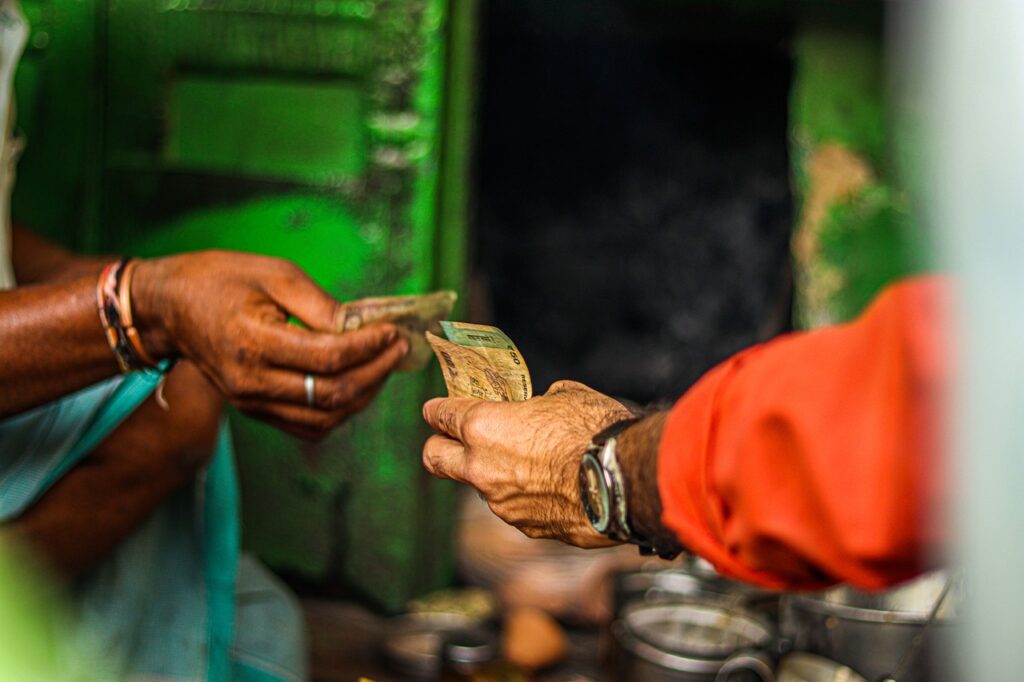
When a child deposits money in the temple Hundi or a Guruwara Golak, that money vanishes instantly, and the immediate reward is abstract—a blessing, prasad, or a sense of peace. The child is left with the feeling of financial loss and emotional void, which runs counter to all other financial lessons they are receiving. This is the heart of the challenge in teaching Temple Donations and Toddlers.
“The child sees the money disappear, not the long-term benefit of the kitchen or school supported by the temple.”
Daan, Shradha, and the Budget
For Indian parents, the act of donation is tied to deep-seated concepts of Daan (charity), Seva (selfless service), and Shradha (sincere faith). These are cultural values that must be taught. However, they must be taught alongside the financial reality that money is finite and allocated. Parents should model that even Daan is a conscious part of the family budget, not a spontaneous, emotionally driven decision.
This is not a spontaneous act; it is a spiritual commitment supported by conscious financial allocation.
The goal is to teach the child that the money being offered is the ‘Share’ portion (from their Save, Spend, Share jar), which has already been budgeted for this specific purpose. The seamless integration of financial planning with spiritual practice is key to addressing the confusion inherent in Temple Donations and Toddlers.
The Ethical and Regulatory Framework of Giving in India
While the focus is on the toddler, understanding the regulatory context of Daan lends authority to the parental lesson. In India, donations to temples and charitable trusts are governed by the Income Tax Act, which grants specific benefits for contributions.1
The concept of Daan is officially sanctioned and supported as a national value.
- Financial Intent: Parents can explain that the temple uses the money to perform Seva (service) that the family cannot do alone, such as running a community kitchen (Langar in Gurudwaras) or a charitable school. This links the donation to a measurable, positive outcome.
- Official Support: For instance, donations to approved religious or charitable trusts are often eligible for deductions under Section 80G of the Income Tax Act, 1961.2 While the child won’t grasp the tax benefit, the parent can explain that the government encourages this type of giving because it helps the country. This formal grounding provides concrete proof that giving is a valued, intentional act.
“The government endorses giving because charity builds the nation; the parent endorses giving because it builds the soul.”
9 Essential Strategies for Temple Donations and Toddlers
These strategies provide the essential emotional, visual, and narrative tools to explain the concept of Daan to preschoolers, successfully navigating the complexities of Temple Donations and Toddlers.
Strategy 1: The Sacred Magic Jar (Separating Sacred Money)
Before leaving for the temple, introduce a small, highly decorated, separate jar—the ‘Sacred Daan Jar’. The child’s coin for the Hundi is taken only from this jar, which is filled intentionally by the parents or from the child’s ‘Share’ portion.
“Money from the Sacred Jar is not lost; it is fulfilling its single, highest purpose.”
This act visually separates the ‘giving’ money from the ‘spending’ money, eliminating the fear that their Save or Spend money is at risk of vanishing. This is the most critical first step for managing Temple Donations and Toddlers.
Strategy 2: The Story of Seva (Temple as Community Hub)
Before the donation, narrate a simple story about where the money goes (LSKW 4: Bal Sanskar lessons on money and shradha).
- Example: “The coin you put in the Hundi is magic. It helps buy rice for the Langar where everyone eats together. It buys paint to keep the temple bright for Bhagwan. It is your share of the Seva.”
The story provides the invisible reward, giving the child an emotional anchor for the abstract act of giving, which is essential for Temple Donations and Toddlers.
“The story of the kitchen turns the invisible Hundi into a visible, bustling community space.”
Strategy 3: The Prasad Link (Immediate, Visible Return)
To bridge the gap between loss (the coin leaving) and gain (the reward), ensure the donation is immediately followed by a guaranteed, visible, small, and positive return.
- Example: The parent can exchange the child’s coin for a small piece of prasad or a tilak from the priest. This simple exchange teaches the child: Giving $\rightarrow$ Blessing (Tangible Reward).
This creates a positive neural association, ensuring the child associates the temple act with positive, immediate emotional and sensory reinforcement.
“The small piece of prasad is the crucial immediate return on investment for the toddler’s emotion.”
Strategy 4: The Envelope Ritual (Formalizing the Act)
For an older preschooler (4–5 years), use a dedicated ritual to formalize the act. Have the child select a coin, place it in a small, auspicious envelope (perhaps drawn on by the child), and seal it.
The ritual adds weight and solemnity, signaling that this is not an impulsive spend, but a considered act of shradha.
When the child deposits the envelope, they are depositing a carefully prepared gift, not just losing a coin. This transforms the act from a casual discard to a purposeful offering, vital for explaining Temple Donations and Toddlers.
Strategy 5: The Token Swap (Small Amount, Big Lesson)
Do not ask the child to donate a large denomination. Use small coins (₹1, ₹2) or a single plastic token.
The small value minimizes the child’s feeling of financial deprivation while maximizing the spiritual lesson.
The parent can even swap a ₹10 note for two ₹5 coins and say, “This ₹5 coin is for your spending Gullak. This other ₹5 coin is for Bhagwan.” The equal value highlights that the money is not lost, but simply fulfilling a different allocation within their budget.
Strategy 6: The Community Visit (Seeing the Result of Giving)
After the donation, walk the child through the areas of the temple supported by the money. This answers the question: “Where did my coin go?”
- Point out: The clean chappal stand, the functioning water cooler, or the specific area where food is being cooked.
This visual confirmation links the abstract donation to the concrete community benefit, successfully achieving the goal of Explaining religious giving to preschoolers India (LSKW 1).
“Seeing the community kitchen in action is the most powerful closing statement for the financial story of the Hundi.”
Strategy 7: The ‘Wish’ Dialogue (Intention Over Value)
Emphasize that the intention (bhav) behind the donation is more important than the value of the coin.
Ask the child: “What do you wish for the temple when you put this coin in? Do you wish for the flowers to be pretty? Or the music to be loud?”
This shifts the focus from the material value of the coin to the spiritual value of the intent, aligning the financial act with the concept of shradha. This is a crucial lesson in teaching Temple Donations and Toddlers.
“The size of the coin does not matter; the size of the heart behind it does.”
Strategy 8: The Gratitude Chant (Shukriya)
Use the moment of giving as an opportunity to model gratitude. After the child deposits the money, the parent should lead a simple, audible chant of thanks (Shukriya or Dhanyawad).
The chant frames the act not as a financial outgoing, but as an expression of thanks for what the child already has.
This reinforces the spiritual side of giving, teaching the child that Daan is a reciprocal act of thankfulness for the abundance in their lives.
Strategy 9: Non-Temple Charity Contrast (LSKW 2: Teaching charity and money to Hindu children)
To prevent the child from associating all charity with the abstract Hundi, introduce a contrast: direct, visible charity. This is a practical step for Explaining religious giving to preschoolers India.
- Example: Use a small amount of money from the ‘Share’ jar to buy biscuits for the street dog or a banana for the chaiwala.
This direct, visible charity shows an immediate, tangible result (a happy dog, a grateful person), which grounds the abstract ‘giving’ concept learned at the temple. This teaches that giving can be for compassion (Daya) or faith (Shradha).
“Direct charity acts as the hands-on control group for the abstract spiritual donation.”
Temple vs. Charity Box: A Comparison for the Toddler’s Mind
The distinction between a general donation and a temple donation must be made clear for the preschooler to grasp the different purposes of their ‘Share’ money. This comparison helps parents refine their teaching of Temple Donations and Toddlers.
| Feature | Temple Hundi (Donation Box) | Open Charity Box (e.g., for Animals, Food) |
| Tangibility of Result | Low (Used for maintenance/community kitchen, results are often invisible or long-term) | High (Food/water for animals, visibly consumed or used for a specific, immediate purpose) |
| Lesson Focus | Shradha, Faith, Cultural Duty, Community Upkeep (Abstract) | Daya, Compassion, Direct Action (Concrete) |
| Toddler Confusion Risk | High (Money vanishes, no visible benefit) | Low (Immediate, visible benefit to a living thing) |
| Emotional Reward | Internal (Blessing, spiritual peace) | External (Happy recipient, physical confirmation) |
| Recommended Age | 4+ (After understanding abstract concepts like ‘faith’) | 2+ (Visual cause-and-effect is immediate) |
“Using the two methods concurrently allows the child to differentiate between abstract spiritual giving and concrete compassionate giving.”

Advantages and Disadvantages of Early Temple Giving
Advantages of Teaching Temple Donations and Toddlers
- Cultural Anchoring: The child integrates the financial act of giving with core Indian values of Daan and Seva early in life.
- Fosters Gratitude: The ritual of giving, paired with a gratitude chant (Strategy 8), grounds the child in thankfulness for abundance.
- Supports Budgeting: The act forces the parent to create a ‘Share’ category in the child’s budget, preventing the money from being impulsively spent.
- Emotional Resilience: The child learns to accept a loss of money for an intangible, higher reward, preparing them for investments and long-term financial goals.
- Addresses LSKW 3 (Financial impact of temple offerings for families): It formalizes the family’s charitable giving, making it an intentional line item rather than an emotional whim.
Disadvantages of Teaching Temple Donations and Toddlers
- Risk of Loss Association: If not handled with the ‘Prasad Link’ (Strategy 3), the child may associate all giving with a negative feeling of financial loss.
- The ‘Bribe’ Risk: If the prasad reward is too high, the child may associate giving with a material bribe, corrupting the spiritual lesson.
- Confusion with Tax/Legal Status: Parents must be careful to keep the conversation simple, avoiding complex topics like the Income Tax Act and 80G deductions, which can overload a preschooler.
- Inconsistency Challenge: If the parents do not follow through with the community visit (Strategy 6), the child’s trust in the narrative is broken, and the money truly seems to vanish.
“The consistency of the parent’s explanation is the ultimate spiritual safeguard for the child’s developing financial mind.”
FAQ Section: Key Questions on Temple Donations and Toddlers
Q: Should I let my toddler put in a big note (e.g., ₹500) if they want to?
A: No. The act of giving is about the intention and ritual, not the value. Swap the ₹500 note for a small coin (₹1, ₹5) and let them place the coin. Explain that the large note is for the family’s Daan, and the small coin is the child’s personal Daan. This prevents the confusion and financial feeling of loss associated with large, sudden amounts, addressing Temple Donations and Toddlers effectively.
Q: How do I handle digital temple donations (via QR code) with a toddler?
A: Use the Token Swap (Strategy 5). When you scan the QR code, immediately give the child a small token or a piece of chalk, and let them draw a small symbol (a diya or Om) on a designated ‘Daan Board’ at home. Explain that the coin went from the phone, and the drawing is the physical sign of their Seva and offering.
Q: Does teaching religious giving conflict with general financial literacy?
A: No, it enhances it, provided you use the Three-Jar System (Save, Spend, Share). Religious giving belongs in the ‘Share’ jar. It teaches the highest purpose of money—community and faith—which is a crucial part of the National Strategy for Financial Education (NSFE) 2020-2025 focus on attitude and behavior.
Q: My child keeps asking, “Why does God need my money?”
A: This is a great question. Answer with the Story of Seva (Strategy 2): “God doesn’t need the money, but God needs the Seva. Since God is everywhere, He asks us to use the money to help the people, animals, and the beautiful building where we come to pray.” This shifts the concept from God needing the money to God needing the action.
Q: When should I introduce the concept of donating to non-temple charities, like NGOs?
A: Immediately (Strategy 9). Use the direct contrast. Introduce non-temple charity (like feeding a community dog) alongside the temple giving. This addresses Teaching charity and money to Hindu children by showing that Daan is universal and applies to all living beings (Jiva), not just religious institutions. For parents planning long-term charitable endowments, the guidance provided in a General Financial Planning Calculator can help set aside funds.
Conclusion: The Offering of Intention
The challenge of Temple Donations and Toddlers is not spiritual; it is a communication gap between a parent’s abstract faith and a child’s concrete world. By applying the 9 Essential Strategies, you convert the simple, vanishing coin into a powerful narrative of intention, community service, and gratitude. You teach the child that money is not only a tool for personal gain but a vehicle for Daan and Seva. The emotionally intelligent management of this single act ensures that the child’s first lessons about giving are rooted in positive intent and confidence, preparing them for a lifetime of thoughtful financial contribution.
This content is for educational purposes and does not constitute personalised financial advice. For personalised advice, visit our services or contact pages.