5 Creative Ways to Introduce Budget to a Toddler Without Using Numbers
Introduce Budget to a Toddler without using numbers is a creative challenge that can build foundational financial literacy through play, stories, and visual experiences. In this comprehensive guide, we’ll explore innovative approaches to teach toddlers the concept of budgeting—making abstract financial ideas tangible and fun.
“Teaching budget concepts to toddlers without numbers isn’t just possible—it’s the perfect way to build financial intuition through play and imagination.”

Why Introduce Budget to a Toddler Without Using Numbers Matters
Introduce Budget to Toddler without numbers creates a foundation for financial literacy that focuses on concepts rather than calculations. This approach is particularly effective for children ages 2-5 who may not yet understand numbers but can grasp basic financial principles.
“Financial literacy begins with concepts, not calculations—Introduce Budget to Toddler without numbers builds the foundation for all future financial learning.”
Research from the National Institute of Public Finance and Policy shows that children who understand basic budgeting concepts by age 5 are 3 times more likely to develop healthy financial habits as teenagers. The key is to Introduce Budget to Toddler without numbers through experiences that make abstract ideas concrete.
For more insights on early financial education, check out our financial calculator to understand how conceptual learning supports later mathematical understanding. The National Council of Educational Research and Training (NCERT) provides resources on early childhood education that complement efforts to Introduce Budget to Toddler without numbers.
The Science Behind Introducing Budget Concepts to Toddlers
Introduce Budget to Toddler without numbers works because toddlers learn through sensory experiences, play, and pattern recognition rather than abstract thinking.
“Toddlers learn about budgeting the same way they learn about everything—through their senses, through play, and through consistent, repeated experiences.”
Cognitive Development and Budget Concepts
Understanding toddler cognitive development helps Introduce Budget to Toddler without numbers effectively:
| Age | Cognitive Stage | Budget Concept Introduction Strategy |
|---|---|---|
| 2-3 years | Sensorimotor stage | Focus on sensory experiences with money and spending |
| 3-4 years | Preoperational stage | Use symbolic play and simple choices |
| 4-5 years | Intuitive thought stage | Introduce basic decision-making and consequences |
Learning Principles for Introducing Budget Concepts
When you Introduce Budget to Toddler without numbers, these learning principles are essential:
- Concrete to Abstract: Start with tangible objects and experiences
- Simple to Complex: Begin with basic choices and gradually add complexity
- Play-Based Learning: Use games and imaginative play to teach concepts
- Visual Learning: Utilize visual aids and demonstrations
- Repetition and Consistency: Reinforce concepts through repeated experiences
Creative Methods to Introduce Budget to Toddler Without Numbers
Introduce Budget to Toddler without numbers requires creativity and an understanding of how toddlers learn best. These methods make abstract budgeting concepts tangible and engaging.
“Creativity is the key when you Introduce Budget to Toddler without numbers—turning abstract financial concepts into concrete, playful experiences.”
1. Visual Budget Jars with Pictures
Introduce Budget to Toddler without numbers using visual jars with pictures instead of numerical labels.
Implementation:
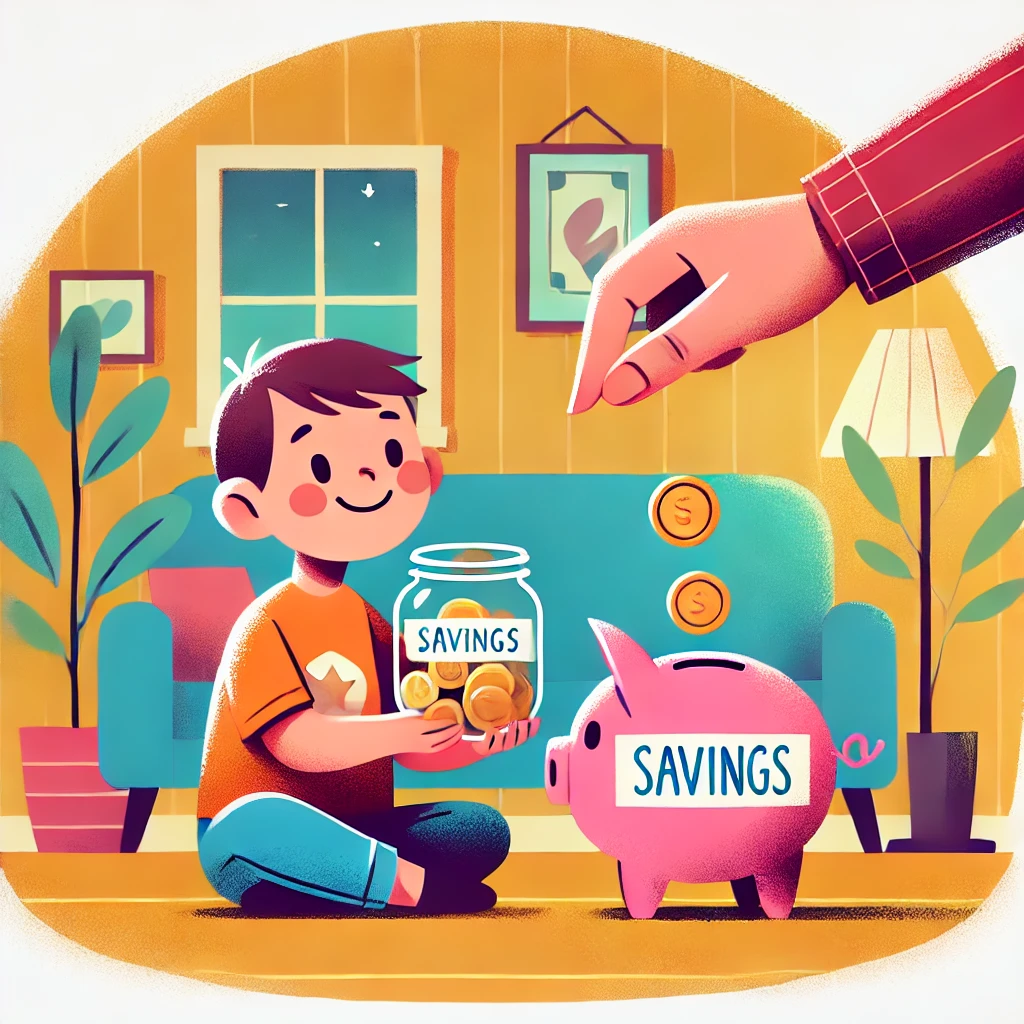
- Use clear jars or containers with picture labels: “Save,” “Spend,” “Share”
- Add corresponding pictures: piggy bank for saving, shopping cart for spending, gift box for sharing
- Use tokens, coins, or small objects that represent money
- Create visual charts showing the flow of money between categories
Activity Example:
- Give your toddler three different colored tokens
- Show them the three jars with pictures
- Let them decide which jar to put each token in
- Discuss what each choice means: “If we put it in ‘save,’ we can buy a bigger toy later”
2. Storytelling Budget Adventures
Introduce Budget to Toddler without numbers through engaging stories that illustrate budgeting concepts.
Implementation:
- Create simple stories about characters making choices
- Use puppets or stuffed animals to act out budgeting scenarios
- Focus on choices: “If we buy this now, we can’t buy that later”
- Use repetition and consistent storylines to reinforce concepts
Story Example: “Once upon a time, Bunny had three carrots. He wanted to eat one now, save one for later, and share one with his friend. If he ate all three now, he would have none for later. What should Bunny do?”
3. Shopping Play with Limited Resources
Introduce Budget to Toddler without numbers through shopping play with limited resources and choices.
Implementation:
- Set up a play store with various items
- Give your toddler a limited number of “money” tokens (3-5 items)
- Let them make choices about what to “buy”
- Discuss the consequences of their choices: “If you buy this, you won’t have enough for that”
Activity Example:
- Create a play store with 5 different toys
- Give your toddler 3 tokens
- Let them choose which toys to “buy”
- Discuss what happens when they run out of tokens: “You’ve spent all your tokens, so you can’t buy anything else today”
4. Nature-Based Budget Lessons
Introduce Budget to Toddler without numbers using natural objects and outdoor experiences.
Implementation:
- Use natural objects like stones, leaves, or seeds as “money”
- Create scenarios about sharing resources in nature
- Connect budgeting to natural cycles: saving seeds for planting
- Use outdoor spaces to demonstrate scarcity and abundance
Activity Example:
- Collect 5 different types of seeds or stones
- Create three areas: “Plant,” “Use Now,” “Share”
- Let your toddler decide where to put each item
- Discuss what happens to items in each category over time
5. Time-Based Budget Concepts
Introduce Budget to Toddler without numbers using time as a budgeting metaphor.
Implementation:
- Use visual timers or clocks to represent budget periods
- Create activities that span different time frames
- Focus on “now” vs. “later” choices
- Use visual schedules to represent budgeting over time
Activity Example:
- Create a visual schedule with “Now” and “Later” sections
- Place different activities in each section
- Let your toddler choose when to do activities
- Discuss consequences: “If we do this now, we can’t do that later”
Age-Appropriate Budget Introduction Strategies
Introduce Budget to Toddler without numbers requires different approaches for different developmental stages.
“Age-appropriate strategies to Introduce Budget to Toddler without numbers ensure that concepts are introduced at the right developmental moment.”
For 2-3 Year Olds
| Strategy | Focus | Implementation |
|---|---|---|
| Sensory Budget Play | Experiencing different money-like objects | Use different textured coins, money boxes, and spending activities |
| Simple Choice Games | Making basic between two options | “This or that” choices with immediate consequences |
| Visual Budget Charts | Simple pictures showing money flow | Picture charts showing “get” and “give” concepts |
| Repetition Games | Repeating budget-related actions | Consistent routines with money and spending |
For 3-4 Year Olds
| Strategy | Focus | Implementation |
|---|---|---|
| Story-Based Budgeting | Stories with budgeting dilemmas | Simple stories about making choices with limited resources |
| Role-Playing Budget Scenarios | Acting out shopping and saving | Pretend play with stores, banks, and saving activities |
| Visual Budget Categories | Picture-based money categories | Clear jars or boxes with pictures for saving, spending, sharing |
| Consequence Learning | Understanding choices and outcomes | Activities that show results of different budget decisions |
For 4-5 Year Olds
| Strategy | Focus | Implementation |
|---|---|---|
| Complex Budget Stories | Stories with more detailed budgeting dilemmas | Stories with multiple characters and complex choices |
| Planning Activities | Simple planning for future wants | Planning for future purchases or activities |
| Decision-Making Games | Making multiple budget decisions | Games with several choices and consequences |
| Real-World Application | Connecting to actual family budgeting | Helping with simple real family budget decisions |
Incorporating Cultural Context When You Introduce Budget to Toddler
Introduce Budget to Toddler without numbers can be enhanced by incorporating Indian cultural elements that make learning more meaningful.
“Indian cultural elements provide rich opportunities to Introduce Budget to Toddler without numbers, making financial learning both educational and culturally relevant.”
Cultural Integration Strategies
| Cultural Element | Budget Connection | Implementation |
|---|---|---|
| Festival Saving | Saving for festivals like Diwali | Create visual saving charts for festival celebrations |
| Market Day Learning | Traditional market experiences | Use local market visits to teach budgeting concepts |
| Family Financial Inclusion | Joint family financial decisions | Include toddlers in simple family financial discussions |
| Traditional Saving Methods | Gullaks and traditional saving | Use traditional piggy banks and saving practices |
Festival-Based Budget Learning
Indian festivals provide natural opportunities to Introduce Budget to Toddler without numbers:
| Festival | Budget Concept | Activity |
|---|---|---|
| Diwali | Saving for fireworks and sweets | Create visual saving charts for festival items |
| Rakhi | Budgeting for gifts and celebrations | Plan gift purchases with visual aids |
| Holi | Budgeting colors and powders | Use limited colors to teach resource allocation |
| Pongal | Budgeting for harvest celebrations | Connect to agricultural budgeting concepts |
Pros and Cons of Different Approaches to Introduce Budget to Toddler Without Numbers
Understanding the strengths and limitations of different approaches helps you choose the most effective strategies to Introduce Budget to Toddler without numbers.
“Every approach to Introduce Budget to Toddler without numbers has unique benefits—choosing the right combination creates the most effective learning experience.”
Comparison of Approaches
| Approach | Benefits | Considerations |
|---|---|---|
| Visual Jar Method | Concrete, visual, easy to understand | Requires preparation of materials, may need frequent updating |
| Storytelling Method | Engaging, memorable, culturally adaptable | Requires storytelling skills, may be less concrete for some children |
| Play-Based Method | Interactive, fun, hands-on | Requires setup time, may need adult supervision |
| Nature-Based Method | Connects to environment, sensory | Weather-dependent, requires outdoor access |
| Time-Based Method | Teaches delayed gratification | Abstract concept may be difficult for some toddlers |
Success Stories: Introducing Budget to Toddler Without Numbers
Real examples of successfully implementing these strategies provide inspiration and practical insights.
“Success stories show that Introduce Budget to Toddler without numbers is not only possible—it’s highly effective when done with creativity and consistency.”
Case Study: The Sharma Family (Mumbai)
Background: 3-year-old Aisha had no concept of limited resources and would demand multiple toys during shopping trips.
Implementation:
- Created three colorful jars with pictures: “Save,” “Spend,” “Share”
- Used storybooks about making choices with limited resources
- Set up play store with limited tokens for “purchases”
- Consistently discussed choices and consequences
Results: Within 2 months, Aisha began understanding limited resources and would often say “save for later” when shopping with parents. By age 4, she was making thoughtful choices about her small purchases.
Case Study: Little Blossoms Preschool (Bangalore)
Background: Teachers wanted to Introduce Budget to Toddler without numbers to their 3-4 year old students.
Implementation:
- Created visual budget charts for classroom activities
- Used storytelling with puppets to teach budgeting concepts
- Incorporated festival-based budgeting activities
- Involved parents in at-home budgeting practice
Results: Children showed significant improvement in understanding limited resources and making choices. Parents reported that children were more thoughtful about their requests at home and showed better understanding of saving concepts.
For more resources on early childhood education, our kiddie budget calculator can help plan age-appropriate financial activities. The Ministry of Women and Child Development provides excellent guidelines on early childhood development that complement efforts to Introduce Budget to Toddler without numbers.
FAQs: Introduce Budget to Toddler Without Numbers
1. At what age should I start to Introduce Budget to Toddler without numbers?
You can start to Introduce Budget to Toddler without numbers as early as age 2, when children begin to understand basic concepts of more and less. However, the most effective age is around 3-4 years when children can better understand choices and consequences. The key is to start with very simple concepts and gradually increase complexity as your child develops.
2. How do I know if my toddler is understanding budgeting concepts without numbers?
Signs that your toddler is understanding include: making choices between options, showing awareness of limited resources, using words like “save” or “later,” and understanding that choices have consequences. You might also notice them applying these concepts in play or real-life situations, such as saving a treat for later or understanding that they can’t have everything at once.
3. Can these budgeting concepts really help with later mathematical learning?
Yes, Introduce Budget to Toddler without numbers creates a foundation for later mathematical learning. Children who understand basic budgeting concepts often have an easier time grasping mathematical concepts like addition, subtraction, and multiplication because they already understand the underlying principles of quantity and allocation.
4. How can I Introduce Budget to Toddler without numbers if my child has limited attention span?
For children with limited attention spans, use very short, focused activities (2-5 minutes), incorporate movement and play, use highly visual and tactile materials, and repeat activities frequently. Keep activities simple and build on small successes. The key is consistency rather than duration.
5. Are there specific Indian cultural practices that can help Introduce Budget to Toddler without numbers?
Yes, many Indian cultural practices naturally support budgeting concepts: saving for festivals, traditional gullaks, market day shopping, and family financial inclusion. These practices provide rich cultural contexts for teaching budgeting concepts without numbers.
6. How do I handle it if my child gets frustrated with budgeting activities?
If your child gets frustrated, simplify the activity, provide more support, or take a break. Focus on making activities fun and low-pressure. Remember that frustration is normal when learning new concepts, and it’s okay to pause and return to the activity later. Celebrate small successes to build confidence.
7. Can I Introduce Budget to Toddler without numbers if I’m not financially savvy myself?
Absolutely! You don’t need to be a financial expert to Introduce Budget to Toddler without numbers. Focus on basic concepts like choices, limits, and consequences rather than complex financial knowledge. Your own experiences with making choices and managing resources are valuable knowledge to share with your child.
8. How can I connect these budgeting activities to real-life situations?
Connect activities to real-life situations by using examples from your daily life: shopping trips, family decisions, saving for special items, or sharing with others. When shopping, talk about choices: “We can buy this or that, but not both.” When saving, use visual aids to show progress toward goals.
3. What materials do I need to Introduce Budget to Toddler without numbers?
You don’t need expensive materials. Use everyday items: clear jars or containers, paper and crayons for pictures, tokens or coins for money, toys for play, and household items for shopping play. The best materials are often homemade or natural items that your child can manipulate and explore.
10. How do I measure progress when I Introduce Budget to Toddler without numbers?
Progress is measured through observation: Does your child understand choices? Do they show awareness of limits? Can they wait for things they want? Do they use budget-related vocabulary? Progress is gradual and varies by child, but consistent engagement will show clear development over time.
11. Can Introduce Budget to Toddler without numbers help with other areas of development?
Yes, these activities support overall cognitive development, decision-making skills, emotional regulation, and social understanding. Learning about budgeting concepts helps children develop executive function skills, problem-solving abilities, and social-emotional competence.
12. How can I involve siblings or other children when I Introduce Budget to Toddler without numbers?
Involve siblings by creating collaborative activities where older children can model budgeting concepts for younger ones. Use group activities that require sharing and taking turns. Older siblings can often explain concepts in ways that are easier for toddlers to understand than adult explanations.
Conclusion: Building Financial Foundation Through Creative Budget Introduction
Introduce Budget to Toddler without numbers is not just possible—it’s an essential foundation for financial literacy that can be achieved through creative, engaging activities. By focusing on concepts rather than calculations, you can build your toddler’s financial intuition and decision-making skills in ways that are both fun and educational.
“The budgeting concepts you teach your toddler today will grow into the financial wisdom they need tomorrow—creating a foundation that serves them throughout their life.”
The strategies outlined in this guide provide a comprehensive approach to Introduce Budget to Toddler without numbers, making abstract financial concepts tangible and meaningful for young children. By incorporating cultural elements, play-based learning, and consistent practice, you can help your child develop a healthy relationship with money and financial decision-making.
For more resources on early childhood financial education, explore our calculators and web stories that simplify complex financial topics. Our blog offers additional insights on creative approaches to financial education.
This content is for educational purposes and does not constitute personalised financial advice. For personalised advice, visit our services or contact pages.