5 Fun Ways Explaining Inflation to Kids Using Toys and Chocolates
Introduction
Explaining inflation to kids doesn’t have to be complicated or boring. By using everyday items like toys and chocolates, parents can transform this complex economic concept into something children can actually see, touch, and understand. This article will show you how to make inflation education fun and memorable for your children while building a foundation for financial literacy that will serve them for years to come.
“Economic education begins not with textbooks, but with toys and treats that make abstract concepts tangible.”
Why Inflation Education Matters for Children
Financial literacy is a critical life skill, yet it’s often overlooked in early education. Explaining inflation to kids at an early age helps them understand why prices change over time and why the same amount of money buys different amounts of things at different times. This understanding builds a foundation for more complex financial concepts later in life.
“Children who understand inflation early grow into adults who make wiser financial decisions.”
According to the Reserve Bank of India, financial literacy should begin at home with simple concepts that children can relate to. Inflation is one such concept that affects everyone, making it an essential part of early financial education.
The Toy Store Inflation Experiment
One of the most effective methods for explaining inflation to kids is through a simple toy store experiment. Start by giving your child a fixed amount of money (say ₹100) and taking them to a toy store. Let them see what toys they can buy with that amount. Then, revisit the same store six months or a year later with the same ₹100 and compare what they can purchase now.
“When the same money buys fewer toys, children experience inflation firsthand—not as an abstract concept, but as a real limitation.”
This experiment works because it connects the abstract idea of inflation to something children care about: their purchasing power for toys. The National Council of Educational Research and Training emphasizes that experiential learning is more effective than theoretical explanations for young children.
The Chocolate Bar Inflation Lesson
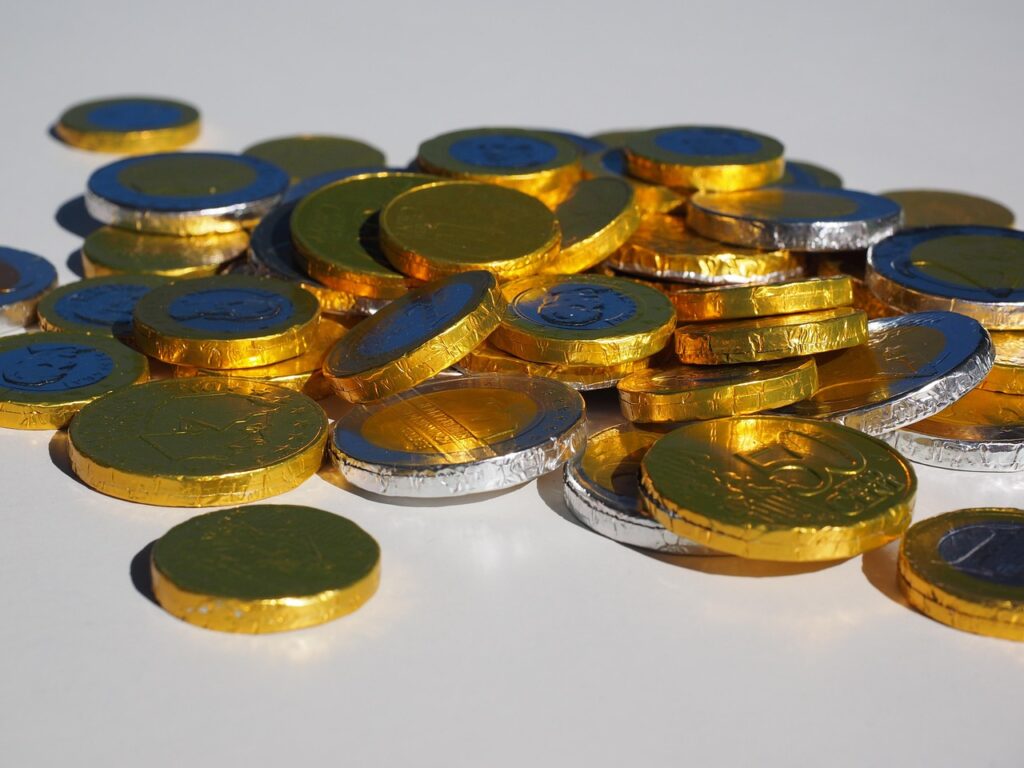
Another powerful method for explaining inflation to kids involves using their favorite chocolate bars. Buy your child’s favorite chocolate bar today and save the receipt. A year later, buy the same chocolate bar and compare prices. This simple demonstration shows how inflation affects even small, everyday purchases.
“A chocolate bar today costs more than yesterday, teaching children that money’s value isn’t fixed—it changes over time.”
To make this lesson more engaging, create a simple chart tracking the price of the same chocolate bar over several years. The National Institute of Public Finance and Policy suggests that visual representations of economic concepts help children understand abstract ideas more concretely.
The Shrinking Chocolate Bar Effect
Sometimes, companies don’t raise prices but instead reduce the size of products while keeping the price the same. This is called “shrinkflation” and it’s another aspect of explaining inflation to kids. Buy the same chocolate bar from different years and compare their sizes or weights.
“When chocolate bars shrink but prices stay the same, children learn that inflation isn’t always about higher numbers—it’s about getting less for the same money.”
The Consumer Affairs Department has highlighted shrinkflation as a common practice that affects consumers. Teaching children about this phenomenon helps them become more aware consumers who check not just prices but also quantities.
The Pocket Money Power Game
Create a simple game where your child’s pocket money remains the same, but the “prices” of their favorite treats or small toys increase each week. This game demonstrates how inflation erodes purchasing power over time.
“Fixed pocket money against rising prices teaches children the most important lesson of inflation: money’s value isn’t constant.”
This game can be enhanced with a simple chart or graph showing how their purchasing power decreases over time. The Securities and Exchange Board of India recommends using games and simulations to teach financial concepts to children.
The Toy Swap Market
Set up a toy swap market where children can trade toys with each other using play money. Then, introduce “inflation” by increasing the prices of toys in subsequent rounds. This hands-on activity helps children understand how inflation affects markets and trade.
“When toy prices rise in a game market, children learn that inflation affects not just buying but entire economic systems.”
The Ministry of Education emphasizes the importance of play-based learning for complex concepts, making this toy swap market an effective educational tool.
How Inflation Affects Savings
Use a clear jar to represent savings. Add coins or notes to represent your child’s savings. Then, explain that inflation is like an invisible force that reduces the value of these savings over time. To demonstrate, you could remove a small percentage of the savings to show how inflation erodes value.
“Inflation is like an invisible tax on savings, teaching children that simply storing money isn’t enough—it must grow to beat inflation.”
The Reserve Bank of India emphasizes that understanding inflation is crucial for effective saving and investment decisions, making this lesson particularly valuable for long-term financial health.
Positive and Negative Aspects of Inflation
When Inflation Works
Inflation isn’t always bad. Moderate inflation can indicate a growing economy where demand for goods and services is increasing. When explaining inflation to kids, it’s important to highlight that some inflation is normal and even healthy for an economy.
“Just like a fever shows the body is fighting infection, moderate inflation shows an economy is growing and active.”
When Inflation Hurts
High inflation, however, can be problematic. It erodes purchasing power, reduces the value of savings, and can create economic uncertainty. When prices rise faster than incomes, people can afford less, which is particularly challenging for families on fixed budgets.
“High inflation is like a fever that’s too high—it doesn’t just indicate activity, it threatens the health of the entire economy.”
Comparison: Inflation Experiences for Kids
| Traditional Explanation Method | Toy/Chocolate Explanation Method |
|---|---|
| Abstract concepts and numbers | Tangible, relatable items |
| Theoretical and distant | Personal and immediate |
| Requires advanced math skills | Uses basic counting and comparison |
| Often boring for children | Engaging and fun |
| Difficult to remember | Creates memorable experiences |
| Parent-led lecture | Interactive exploration |
| Focuses on complex causes | Focuses on observable effects |
| Limited to older children | Suitable for various ages |

Pros and Cons of Using Toys and Chocolates to Teach Inflation
Advantages:
- Makes abstract economic concepts concrete and understandable
- Creates positive associations with financial education
- Uses items children already care about, increasing engagement
- Provides tangible examples that children can see and touch
- Can be adapted for different age groups and understanding levels
- Encourages questions and deeper curiosity about economic concepts
- Builds a foundation for more complex financial education later
Disadvantages:
- May oversimplify complex economic factors
- Could create anxiety about money if not handled carefully
- Might not capture all aspects of inflation (like wage increases)
- Requires parents to have some understanding of inflation themselves
- The connection between toys/chocolates and real-world inflation may not be immediately obvious
- May need to be supplemented with more detailed explanations as children grow older
- Could reinforce materialistic values if not balanced with non-material aspects of life
Frequently Asked Questions
At what age should I start explaining inflation to kids?
You can introduce basic inflation concepts as early as age 6-7 using simple examples like toy prices. More complex explanations can be added as children develop better understanding of numbers and economics, typically around age 10-12.
How can I explain inflation without making my child anxious about money?
Focus on education, not fear. Present inflation as a normal economic phenomenon that everyone experiences, and emphasize that understanding it helps people make better financial decisions. Avoid doom-and-gloom scenarios.
Are there any games or apps that help with explaining inflation to kids?
Yes, several educational games and apps address economic concepts. Look for ones that use visual elements and interactive features. The RBI’s financial education resources offer child-friendly materials.
How does inflation relate to my child’s pocket money?
Inflation affects the purchasing power of pocket money over time. This can be a practical lesson in why occasional pocket money increases might be necessary to maintain the same buying power.
Should I adjust my child’s pocket money for inflation?
While not essential, periodically adjusting pocket money to reflect increased costs can be educational. It helps children understand the real-world impact of inflation and the relationship between earnings and purchasing power.
How can I measure inflation in a way my child can understand?
Track the price of a few items your child regularly buys or wants, like a particular chocolate bar or small toy. Create a simple chart showing how prices change over time—this visual representation makes inflation concrete.
What’s the difference between inflation and just price increases?
Inflation is a general increase in prices across the economy, not just for specific items. When explaining to kids, you can use the example of many different items (toys, chocolates, books) all getting more expensive around the same time.
How does inflation affect savings?
Inflation reduces the purchasing power of money over time, meaning that savings can buy less in the future than they can today. This is why simply keeping money in a jar isn’t enough—it needs to grow to beat inflation.
Is inflation always bad for the economy?
No, moderate inflation (usually around 2-3%) is considered healthy for an economy. It indicates demand is growing and encourages spending and investment rather than hoarding money. Problems arise when inflation is too high or too low.
How can I teach my child about inflation when prices are stable?
Even when prices seem stable, you can discuss historical inflation or use examples from other countries. You can also create hypothetical scenarios or use board games that simulate economic changes.
Should I teach my child about deflation as well?
Yes, briefly explaining deflation (falling prices) provides a more complete picture. You can use examples like technology products that often get cheaper over time, but explain that sustained deflation can be problematic for the economy.
How does inflation relate to interest rates on savings accounts?
When inflation is higher than the interest rate on savings, the real value of money decreases. This is an important lesson about why simply saving might not be enough and why investing becomes important for long-term financial health.
Conclusion
Explaining inflation to kids using toys and chocolates transforms an abstract economic concept into something tangible, relatable, and even fun. These methods help children understand that money’s value changes over time and that prices don’t stay fixed. By starting this education early, parents can build a foundation for financial literacy that will serve their children throughout life.
The key is to make these lessons interactive, positive, and connected to children’s everyday experiences. When children understand inflation through toys and chocolates, they’re not just learning about economics—they’re developing critical thinking skills that will help them navigate an increasingly complex financial world.
For more tools to support your child’s financial education, check out our kiddie-budget-calculator or explore our financial-calculator for more complex concepts. If you need personalized guidance, don’t hesitate to contact us or learn more about our services.
This content is for educational purposes and does not constitute personalised financial advice. For personalised advice, visit our services or contact pages.