7 Brilliant Ways to Make First Bank Visit Educational for Kids
First bank visit educational experiences can transform routine errands into powerful learning opportunities that shape children’s understanding of money and financial systems. In this comprehensive guide, you’ll discover how to turn your child’s first trip to the bank into an engaging adventure that builds financial literacy foundations and creates positive associations with banking.
“A child’s first bank visit can create lasting impressions about money, financial institutions, and their own relationship with both.”
Table of Contents
First Bank Visit Educational: Why It Matters for Financial Literacy
First bank visit educational opportunities are crucial because they provide children with concrete experiences of abstract financial concepts. Unlike theoretical lessons about money, a bank visit shows children where money is stored, how it’s managed, and how financial transactions work in the real world.
“Seeing banking operations firsthand demystifies financial systems and makes money concepts tangible for young minds.”
Children encounter money daily, but banks represent the formal financial system that manages and safeguards money. A positive first experience helps children understand that banks are helpful institutions rather than intimidating places, building confidence for future financial interactions.
The Reserve Bank of India emphasizes the importance of financial literacy starting from a young age, and bank visits provide perfect opportunities for practical learning that complements classroom education.
Why First Bank Visit Educational Experiences Create Lasting Financial Confidence
First bank visit educational experiences work effectively because they combine visual learning, social interaction, and real-world application. Children learn best through multisensory experiences, and banks offer rich environments with visual displays, professional interactions, and observable processes.
“Multisensory banking experiences create stronger neural connections than theoretical lessons alone.”
When children see the physical bank, meet bank staff, observe transactions, and participate in simple banking activities, they build comprehensive understanding that goes beyond book learning. This experiential knowledge creates confidence that lasts into adulthood.
Bank visits also naturally incorporate mathematical concepts like counting, calculating, and understanding value—skills that extend beyond financial literacy to general academic success. The practical application of these skills in a real banking context makes learning more meaningful and memorable.
When First Bank Visit Educational Experiences Can Overwhelm Children
Despite the benefits, first bank visit educational experiences can sometimes create anxiety or confusion if not handled properly. The formal atmosphere, unfamiliar procedures, and importance placed on money can make banks intimidating for children.
“Too much formality or complexity can turn a learning opportunity into a stressful experience for young children.”
Another challenge occurs when expectations are mismatched—if children expect exciting entertainment but encounter routine banking procedures, they may become bored or disengaged. This mismatch can create negative associations with banking that persist.
Some children also struggle with understanding banking terminology and procedures that seem abstract or confusing. Without proper preparation and age-appropriate explanations, children may feel lost or frustrated during the visit.
First Bank Visit Educational: Strategy 1 – Pre-Visit Preparation
Prepare children before the bank visit by explaining what banks do, what they’ll see, and how they should behave. Use simple language, pictures, or stories to familiarize children with banking concepts.
“Proper preparation transforms potential anxiety into excited curiosity about the banking experience.”
For younger children, read books about banking or money, play bank-related games at home, or role-play simple banking scenarios. For older children, discuss different banking services and what specific activities they’ll observe during the visit.
Create a simple “bank visit checklist” with pictures or words of things to look for during the visit. This gives children a mission and helps them stay engaged and focused on learning objectives.
First Bank Visit Educational: Strategy 2 – Meet the Bank Staff
Introduce children to bank staff and encourage simple interactions. Most bank employees are happy to explain their roles and demonstrate basic banking procedures when given advance notice.
“Positive interactions with bank staff humanize the banking experience and build children’s confidence.”
Call ahead to schedule a brief introduction with a teller or customer service representative who can explain their job and show children how they help customers. Many banks have educational programs or welcome opportunities to teach children about banking.
These interactions help children see bank staff as helpful professionals rather than intimidating figures. The Indian Banks’ Association often promotes financial literacy initiatives that include bank staff interactions with children.
First Bank Visit Educational: Strategy 3 – Observe Banking Operations
Guide children to observe different banking activities happening around them. Point out tellers helping customers, people using ATMs, safety measures, and how the bank is organized.
“Observational learning helps children understand the complexity and importance of banking operations.”
Help children identify different areas within the bank—customer service desks, teller stations, safe deposit boxes, ATMs, and manager offices. Explain what happens in each area and why different areas are designed for specific purposes.
For older children, discuss security measures like cameras, security guards, and restricted areas. Explain how these protect both the bank and customers’ money, introducing concepts of trust and safety in financial systems.
First Bank Visit Educational: Strategy 4 – Simple Account Demonstration
If appropriate, demonstrate simple account procedures like making a deposit or withdrawal. Let children observe or participate in basic transactions under close supervision.
“Hands-on transaction experience makes abstract banking concepts concrete and memorable.”
For younger children, this might involve watching you deposit money and explaining each step. For older children, consider letting them hand over a deposit slip or receive a receipt, explaining what each document represents.
Consider opening a savings account for your child during the visit, making them an active participant in banking rather than just an observer. Many banks offer special savings accounts for children with educational features. The Pradhan Mantri Jan Dhan Yojana provides information about basic banking services that can help families understand account options.
First Bank Visit Educational: Strategy 5 – Security and Safety Education
Teach children about bank security measures and personal safety during banking transactions. Explain why banks have security cameras, guards, and safe procedures.
“Security education helps children understand both the protection of money and personal safety in banking environments.”
Point out security features like cameras, alarm buttons, and safety glass. Explain how these protect both the bank’s money and customers’ money. For older children, discuss personal safety practices like keeping PIN numbers private and being aware of surroundings when using ATMs.
This security education builds awareness of both physical safety and financial security—important concepts for responsible financial behavior.
First Bank Visit Educational: Strategy 6 – Money Handling Practice
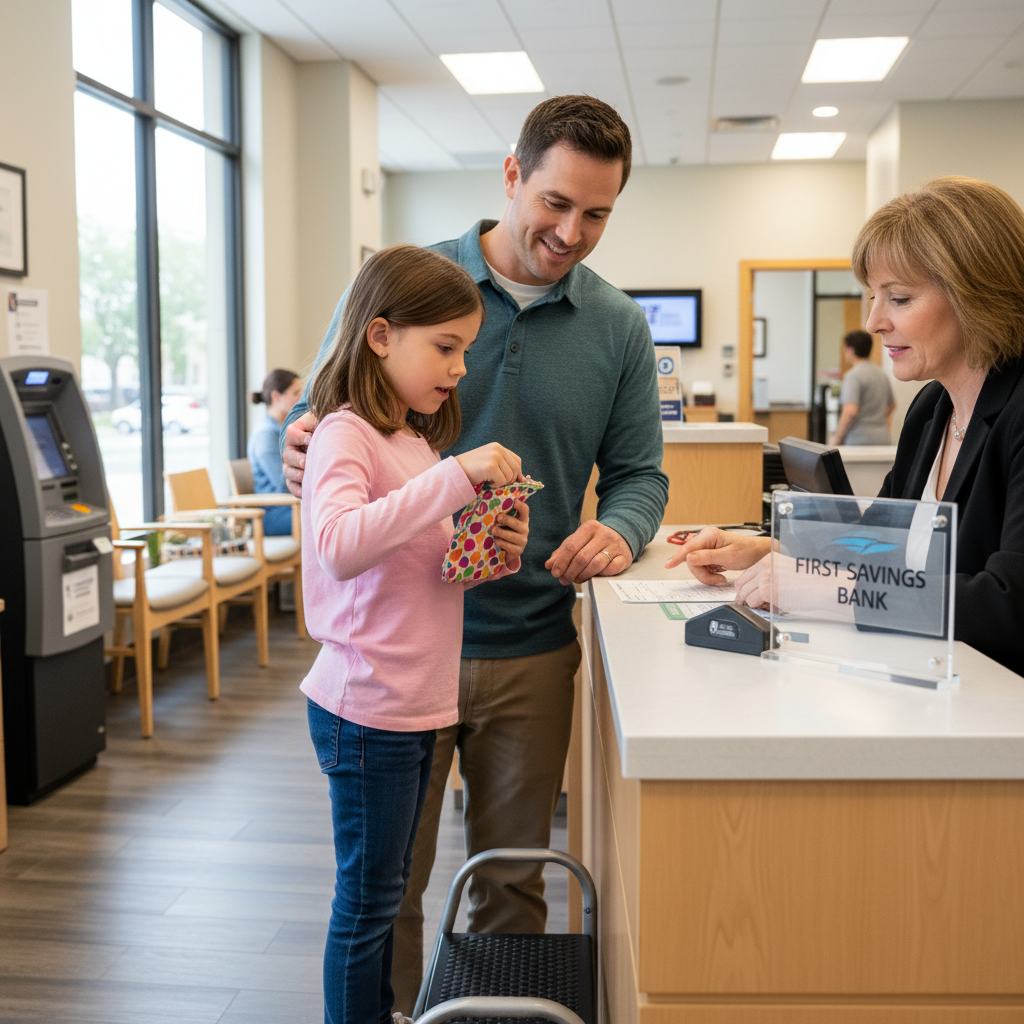
Provide opportunities for children to handle money safely and appropriately in the banking environment. This might include counting money, organizing coins and bills, or understanding different denominations.
“Safe money handling practice builds both practical skills and respect for money’s value.”
Bring coins and bills for children to count and organize, explaining different denominations and their values. Practice simple transactions like handing money to a teller and receiving change, explaining each step in the process.
For younger children, focus on identifying different coins and bills and understanding their relative values. For older children, practice calculating totals and making change, building mathematical skills alongside financial literacy.
First Bank Visit Educational: Strategy 7 – Post-Visit Reflection and Learning
After the bank visit, discuss what children observed and learned. Reinforce key concepts and connect the experience to broader financial literacy lessons.
“Post-visit reflection solidifies learning and helps children integrate banking experiences into their understanding of money.”
Ask children to draw pictures of what they saw, write about their experience, or play bank-related games at home. Create a simple “bank book” with pictures or notes about the visit that children can review and add to over time.
Consider setting up a pretend bank at home where children can practice the concepts they learned. This reinforcement helps transfer the real-world experience into lasting understanding and skills.
First Bank Visit Educational: Age-Appropriate Approaches
For Ages 4-7
Focus on basic awareness and simple concepts. Young children can learn that banks keep money safe, understand basic bank staff roles, and recognize different coins and bills.
“Early bank visits should focus on positive exposure rather than complex financial concepts.”
Keep visits short (15-20 minutes) and focus on visual elements and simple interactions. Use plenty of praise and encouragement to create positive associations with banking.
For Ages 8-12
Introduce more complex concepts like account types, interest, and basic banking procedures. School-age children can understand how deposits work, why banks exist, and how they help people manage money.
“Elementary-age children can handle surprisingly sophisticated banking concepts with proper guidance.”
Involve them more actively in transactions, explain banking terms in simple language, and encourage questions about how banks operate. This age group can benefit from seeing how their own savings account works.
For Teens
Challenge teenagers with advanced concepts like interest rates, digital banking, and financial services beyond basic accounts. Teens can understand how banks make money, how interest compounds, and how to evaluate different banking services.
“Teenage bank education prepares them for independent financial management and decision-making.”
Consider giving teens more responsibility in managing their own accounts, researching banking services, or even helping younger siblings understand banking concepts. This real-world responsibility builds practical financial skills.
Safety Considerations for Bank Visits
Personal Safety
Teach children basic safety rules for bank visits: stay close to parents, don’t talk to strangers, and know what to do if separated. These safety rules help children feel secure while learning.
“Safety education ensures that bank visits are both educational and secure for children.”
Practice what to do if children get separated from parents in the bank. Identify safe people to ask for help, like bank employees in uniform or security guards. The Ministry of Home Affairs provides safety guidelines that can supplement these lessons.
Financial Safety
Teach children about protecting personal and financial information. Explain why bank account numbers, PINs, and personal details should be kept private.
“Financial safety education protects children and builds awareness of security in banking.”
For older children, discuss digital banking safety, including password protection, recognizing secure websites, and understanding phishing attempts. These skills are increasingly important in today’s digital banking environment.
Advantages of Bank Visit Education
Real-World Financial Literacy
Bank visits provide practical, applicable financial knowledge that children will use throughout their lives. Understanding how banks work builds confidence in managing money and accessing financial services.
“Practical banking knowledge creates capable adults who can navigate financial systems with confidence.”
Positive Banking Attitudes
Early positive experiences with banks help children view financial institutions as helpful rather than intimidating. This positive attitude encourages responsible banking behavior and financial engagement later in life.
Mathematical and Social Skill Development
Bank visits naturally incorporate mathematical concepts like counting, calculating, and understanding value, along with social skills like interacting with professionals and following procedures.
Challenges in Bank Visit Education
Formal Environment
Banks are formal, professional environments that can feel intimidating to children. The quiet atmosphere, importance placed on money, and formal procedures can make children uncomfortable or anxious.
Limited Child-Friendly Features
Many banks are designed primarily for adult customers and may not have child-friendly features or educational programs. This limitation requires parents to be more creative in making visits educational and engaging.
Time and Access Constraints
Bank visits often need to fit around busy schedules and banking hours, making it challenging to dedicate sufficient time for educational experiences. Additionally, some families may have limited access to bank branches, especially in rural areas.
Frequently Asked Questions
1. At what age should I take my child for their first bank visit?
Start around age 4-5 with a very short, simple visit focused on basic exposure. For more educational value, ages 7-8 are ideal when children can understand basic banking concepts and maintain attention for 20-30 minutes.
2. How long should a first bank visit be for children?
For children under 7, keep visits to 15-20 minutes maximum. For ages 8-12, 30-45 minutes is appropriate if the visit is engaging and interactive. Always be prepared to leave early if children become tired or overwhelmed.
3. What should I do if my child feels anxious during the bank visit?
Acknowledge their feelings and offer reassurance. Take breaks if needed, focus on positive aspects, and don’t force participation. Consider shorter visits next time and build up gradually as they become more comfortable.
4. Can bank visits really teach children about money management?
Yes, bank visits provide concrete understanding of where money goes, how it’s protected, and how financial systems work. These foundations are essential for later money management skills and financial responsibility.
5. Should I open a bank account for my child during the first visit?
For children under 10, it’s usually better to focus on observation and learning during the first visit. Consider opening an account on a separate visit when children are more familiar with the banking environment and understand basic concepts.
6. How do I explain what banks do to young children?
Use simple analogies like “Banks are like big, safe piggy banks that help people keep their money safe and grow it.” Focus on protection and safety aspects rather than complex financial services.
7. What if my local bank doesn’t welcome children for educational visits?
Call ahead and explain your educational goals. Many banks are happy to accommodate educational visits when given advance notice. If not, consider visiting during less busy times and focusing on observation rather than interaction.
8. How do I make bank visits educational for children with special needs?
Adapt the experience to your child’s specific needs and sensitivities. Children with sensory issues may need quieter times, shorter visits, or more preparation. Children with cognitive differences may need simpler concepts and more visual supports.
9. Can these strategies work for digital banking education?
Yes, adapt the core principles for digital banking by showing children online banking interfaces, explaining digital security, and demonstrating online transactions. However, combine digital education with at least one physical bank visit for concrete understanding.
10. How do I measure if my child learned from the bank visit?
Look for them discussing banking concepts, showing understanding of money safety, or demonstrating responsible money behaviors. Remember that learning is gradual—repeated visits and experiences build understanding over time.
11. What if my child asks difficult questions about banking or money?
Answer honestly at an age-appropriate level. It’s okay to say “That’s a great question, let’s learn about that together” if you don’t know the answer. Use these questions as opportunities for further learning.
12. How often should I take my child to the bank for educational visits?
Start with 2-3 visits per year for young children, focusing on different aspects each time. As children grow and understand more, visits can become less frequent but more focused on specific learning objectives.
Conclusion
First bank visit educational experiences provide invaluable opportunities to build financial literacy, positive banking attitudes, and practical money skills in children. By implementing the seven strategies outlined in this guide—pre-visit preparation, meeting bank staff, observing operations, simple account demonstrations, security education, money handling practice, and post-visit reflection—you can transform routine bank visits into engaging learning adventures.
The key is making bank visits age-appropriate, positive, and connected to children’s developing understanding of money. Start with basic exposure and gradually increase complexity as children grow. Remember that the goal is not just teaching about banks, but building the financial confidence and awareness that will serve children throughout their lives.
For more resources on financial education for children or personalized guidance for your family’s needs, visit our services page or contact our team. You can also explore our blog for additional articles on practical financial literacy strategies for families.
This content is for educational purposes and does not constitute personalised financial advice. For personalised advice, visit our services or contact pages.