
That WhatsApp message offering you a “pre-approved loan of ₹10 lakhs” might look tempting, but it could cost you your entire life savings. I’m not exaggerating – last month, a senior citizen lost ₹12 lakhs to a Loan Scams and Phishing attack that started with a simple text message. The scammers didn’t just take his money; they stole his identity, his peace of mind, and his dignity.
In my 15 years fighting financial fraud, I’ve seen Loan Scams and Phishing evolve from simple emails to sophisticated multi-layered attacks that even fool educated professionals. According to OurFinocracy’s 2026 analysis, loan-related fraud cases increased by 180% in the last year alone. The scammers are getting smarter, but so can you. For the latest fraud alerts, visit the RBI’s fraud awareness page.
If you’ve received suspicious loan offers or think you might be targeted, don’t wait to become a victim. Our fraud prevention experts at OurFinocracy offer free security assessments to help you protect your financial identity.
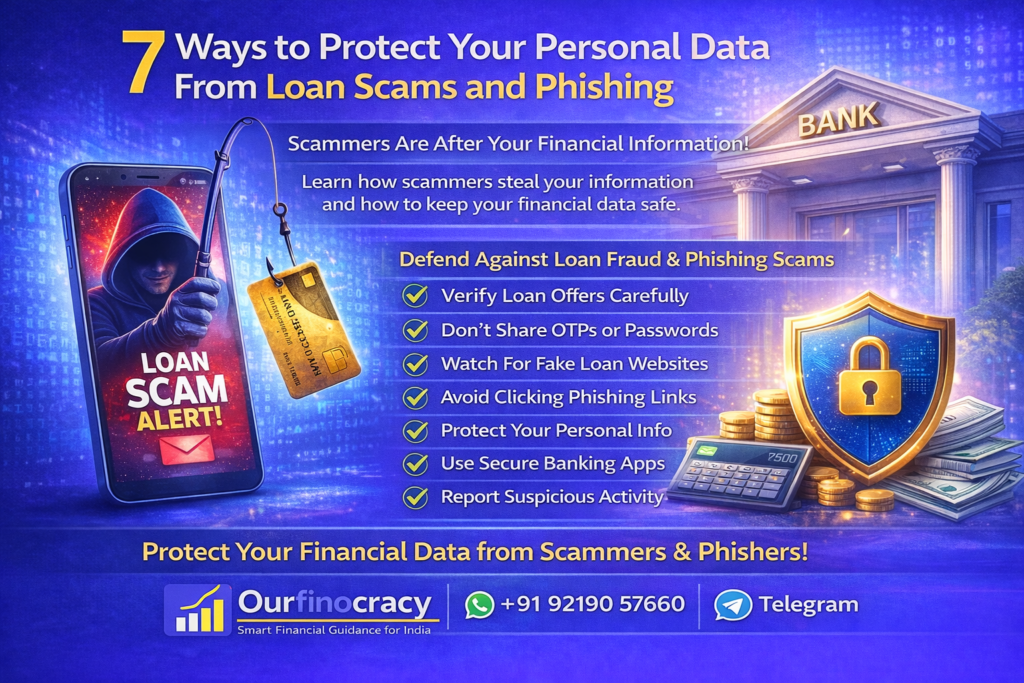
Table of Contents
How Loan Scams and Phishing Really Work
Let me pull back the curtain on how these scams operate. It’s not random – it’s a well-planned psychological attack designed to bypass your rational thinking.
The Process:
- Data Harvesting: Scammers buy your data from data brokers or hack databases
- Personalized Approach: They use your name, bank details, and loan history
- Urgency Creation: “Limited time offer,” “Pre-approved expires today”
- Trust Building: Fake bank logos, employee names, and official-looking documents
- Data Extraction: They ask for “verification” of your details
- The Trap: Once they have your data, they either steal money or sell it to other scammers
Real Example: A client received an email from “HDFC Bank” offering a pre-approved loan. The email looked perfect – right logo, right format, right tone. But when we checked the sender’s email address, it was hdfc.bank@gmail.com instead of hdfc@hdfcbank.com. One small detail, huge difference.
Protection Method 1: Verify Before You Trust
Never trust unsolicited loan offers, no matter how legitimate they look. Always:
- Call the bank directly using their official number (not the one in the message)
- Check email addresses carefully
- Visit the bank’s official website directly (don’t click links)
- Verify the sender’s identity through official channels
Red Flag: If you didn’t apply for a loan, you didn’t get “pre-approved.” Period. For more verification tips, visit the Ministry of Home Affairs’ cyber safety portal.
Protection Method 2: Protect Your KYC Documents
Your PAN card, Aadhar, and bank statements are gold for scammers. Never share:
- Original KYC documents with unknown parties
- OTPs for transactions you didn’t initiate
- Bank account details over phone or email
- ATM card numbers and CVVs
Have you already shared sensitive information? Our team at OurFinocracy can help you secure your accounts and monitor for suspicious activities.
Protection Method 3: Recognize Phishing Patterns
Loan Scams and Phishing attacks follow predictable patterns:
Urgency Tactics:
- “Offer expires in 2 hours”
- “Only 3 spots left”
- “Pre-approved for today only”
Too Good to Be True:
- “100% guaranteed approval”
- “Zero documentation required”
- “Instant loan, no credit check”
Pressure Tactics:
- “Your application will be cancelled”
- “You’ll lose this opportunity forever”
- “Our manager has personally approved this”
Protection Method 4: Secure Your Digital Footprint
Scammers find you through your digital presence. Protect yourself by:
- Using strong, unique passwords for financial apps
- Enabling two-factor authentication everywhere
- Being careful about what you share on social media
- Regularly checking your credit report for unauthorized inquiries
According to the Credit Information Bureau (India) Limited, checking your credit report quarterly can help detect fraud early.
Protection Method 5: Understand the Data Economy
Your personal data is being bought and sold every day. Loan Scams and Phishing thrives because:
- Data brokers sell your information legally
- Apps collect more data than they need
- Companies share data with “partners”
- Data breaches expose millions of records
Real Impact: A client discovered his loan application was rejected due to multiple inquiries – inquiries he never made. Scammers had used his data to apply for loans in his name.
Protection Method 6: Create a Fraud Response Plan
Don’t wait until you’re a victim. Have a plan:
- Save important contact numbers (bank, RBI, police)
- Keep copies of all important documents
- Know how to freeze your credit report
- Understand the complaint process
The National Cyber Crime Reporting Portal provides step-by-step guidance for reporting financial fraud.
Protection Method 7: Trust Your Instincts
Your brain is your best fraud detector. If something feels off, it probably is. Signs that should trigger your fraud radar:
- Poor grammar in official-looking emails
- Requests for unusual information
- Pressure to act immediately
- Offers that seem too good to be true
- Communication through unusual channels (WhatsApp, Telegram)
Remember: Legitimate banks never ask for your full PIN, password, or OTP. Never. If someone asks for these, it’s 100% a scam.
What to Do If You’re a Victim
- Act Immediately: Every minute counts
- Contact Your Bank: Block cards, change passwords
- File Police Complaint: Get an FIR registered
- Report to RBI: Use their online complaint portal
- Inform Credit Bureaus: Add a fraud alert to your report
- Monitor Everything: Check all accounts regularly
Feeling overwhelmed by the recovery process? Our experts at OurFinocracy have helped hundreds navigate the post-fraud recovery process. We offer guidance on every step from reporting to recovery.
Frequently Asked Questions
Q1: How do I know if a loan offer is real or fake?
A1: Real loan offers come from banks you’ve contacted first. Unsolicited offers are almost always fake. Verify directly with the bank using their official contact information, not details provided in the message.
Q2: Can scammers really use my PAN card to get loans?
A2: Yes, scammers can use your PAN card along with other stolen information to apply for loans in your name. This is why monitoring your credit report regularly is crucial.
Q3: What should I do if I accidentally shared my OTP?
A3: Immediately change your banking passwords, enable two-factor authentication, and contact your bank to report potential fraud. Monitor your accounts closely for unauthorized transactions.
Q4: Are loan apps on Play Store safe?
A4: Not necessarily. Many fake loan apps make it to official stores. Always check RBI registration and reviews before downloading any financial app.
Q5: How do I report loan scams to RBI?
A5: You can file complaints online through RBI’s Integrated Ombudsman Scheme or email them at crpc@rbi.org.in with all evidence of the scam.
Q6: Can I get my money back if I’ve been scammed?
A6: It’s difficult but possible. Act immediately, file police complaints, and follow up persistently. Our experts can guide you through the recovery process.
Q7: How often should I check my credit report?
A7: Check your credit report at least quarterly, or more frequently if you suspect you’ve been targeted by scammers. You can get free reports from CIBIL, Experian, and Equifax.
Q8: Should I respond to scam messages to tell them I know?
A8: No, never respond to scammers. Block and delete them immediately. Responding confirms your number is active and may lead to more targeting.
Author Note
With over 15 years in financial services, I’ve fought Loan Scams and Phishing on multiple fronts – helping victims, educating borrowers, and even assisting law enforcement. The scammers are sophisticated, but they’re not invincible. Knowledge and quick action are your best defenses. This guide comes from real cases, real experiences, and real solutions that work. Remember, in the battle against financial fraud, you’re not alone – help is available, and recovery is possible. Read more about my expertise on the OurFinocracy author page.

Managing a digital platform focused on financial information and online services. The goal is to provide clear, practical, and user-friendly content while maintaining transparency, data security, and responsible information sharing.