15 Simple Money Games for Preschoolers Without Using Apps or Screens: The Low-Cost Indian Guide
The challenge for today’s Indian parent is how to teach the physical, tangible value of money in a world increasingly dominated by invisible, abstract digital transactions like UPI. The key is to leverage the preschooler’s (ages 3–6) need for hands-on, tactile learning. While most global guides suggest expensive, Western-style board games, this comprehensive, low-cost Indian guide provides 15 powerful, screen-free activities using real Indian currency and everyday household items. These Simple Money Games for Preschoolers Without Using Apps or Screens are specifically designed to fill the global content gap, offering a culturally relevant roadmap that builds foundational financial literacy—scarcity, value, and ethical exchange—into your child’s daily play, preparing them for the complex digital economy of tomorrow.
“The ethical foundation of finance is laid not in an app, but in the palm of a child holding a real rupee coin.”
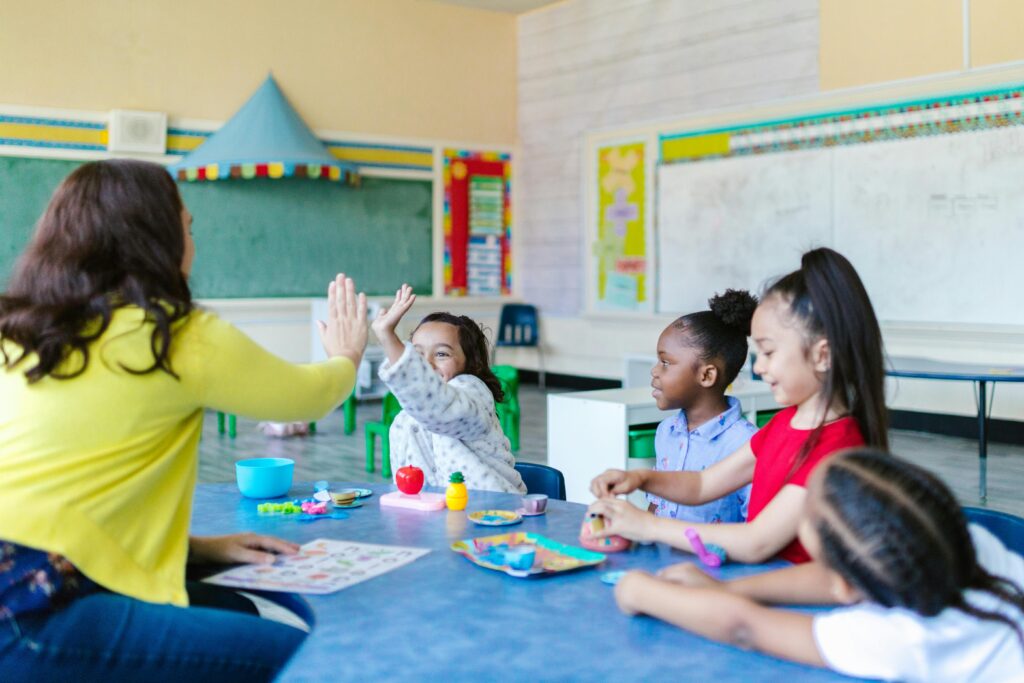
Why Screen-Free Financial Play is a Neurological Necessity
The foundational years (3–6) are when the brain forms its strongest connections between sensory input and cognitive concepts. Financial concepts like Scarcity (the coin is gone once spent), Value (one ₹10 coin is worth more than three ₹1 coins), and Delayed Gratification (saving today for a bigger toy tomorrow) are abstract ideas.
By engaging in Simple Money Games for Preschoolers Without Using Apps or Screens, the child uses their senses:
- Touch: Feeling the weight and texture difference between a ₹1 coin and a ₹10 coin.
- Sight: Visually watching a small pile of savings grow larger over time.
- Action: The physical act of handing over a note and receiving a different set of coins (change).
This tactile learning builds a robust, long-term memory of value that simply cannot be replicated by tapping a colored icon on a screen. According to the National Council of Educational Research and Training (NCERT) guidelines for Early Childhood Education, experiential and play-based learning is paramount for developing conceptual clarity and critical thinking, which is exactly the goal of these Simple Money Games for Preschoolers Without Using Apps or Screens (Source: NCERT Official Website).
“Hands-on play creates a cognitive bridge between the physical world of currency and the abstract concept of value.”
The Low-Cost Indian Toolkit: DIY Financial Learning
The beauty of the Indian low-cost model is the re-purposing of everyday items, making these Simple Money Games for Preschoolers Without Using Apps or Screens universally accessible.
| Component | Western/Expensive Alternative | Low-Cost Indian Source | Financial Concept Addressed |
| Currency | Plastic play money/Tokens | Real ₹1, ₹2, ₹5, ₹10 coins and low-denomination notes | Tangibility and True Value |
| Cash Register | Toy cash register set | Empty shoe box or old mithai (sweet) tin with dividers | Transaction and Organization |
| Saving Jars | Designer piggy banks | Clear glass achar (pickle) jars or old spice dabbas | Transparency and Allocation |
| Tokens/Interest | Poker chips | Colored buttons, marbles, or dried kidney beans (Rajma) | Compounding and Passive Earning |
| Tracking Board | Magnetic reward chart | Small chalkboard, cardboard, or a sheet of newsprint | Accountability and Budgeting |
“Affordable materials ensure that financial literacy is an ethical right, not a consumer luxury.”
15 Simple Money Games for Preschoolers Without Using Apps or Screens
The following games are tailored to the Indian context, using common currency denominations and cultural scenarios to teach core financial principles.
Game 1: The Kirana Store Cash Register Role-Play
Concept Taught: Exchange, Transaction, Change Calculation (Early Math)
How to Play: Designate a corner as the “Local Kirana Store.” Use actual, non-perishable kitchen items (small spice packets, tea bags, an empty biscuit wrapper) and label them with price tags (e.g., ₹8, ₹15). The child is the Kirana Store Owner. The parent (customer) “buys” an item and pays with a larger note or coin (e.g., buying a ₹12 item with a ₹20 note). The child must count out the change using a few different coin combinations. The focus is on counting up from the price paid to the amount given (e.g., ₹12 + ₹2 + ₹5 + ₹1 = ₹20).
“The act of counting change back in a Kirana store teaches the child that money is relative and divisible, not just a single number.”
Game 2: The Coin Sorting Rangoli
Concept Taught: Value Recognition, Classification, Physical Difference
How to Play: Draw a four-quadrant Rangoli-style pattern on a large sheet of paper. Label each section with a different coin value: “₹1,” “₹2,” “₹5,” and “₹10.” Mix a pile of these coins together. The child must quickly sort the coins into the correct section. Challenge them to guess the coin’s value by feeling its size, weight, and ridges, especially to differentiate between the larger ₹1 coin and the smaller ₹10 coin—a common source of confusion in Indian currency.
“Connecting a coin’s weight and physical attributes to its embossed value establishes a crucial physical memory of financial worth.”
Game 3: The Shagun Allocation Jars
Concept Taught: Budgeting, Allocation (Save, Spend, Share), Ethical Giving
How to Play: Set up three distinct, clear jars: “Spend,” “Save,” and “Share (Daan).” When the child receives unearned money (like a Shagun gift from a relative), they must immediately implement the Partitioning Rule (e.g., 50% Save, 30% Spend, 20% Share). This teaches that money must be allocated for specific purposes and introduces the Indian ethical concept of Daan (charity) as a non-negotiable part of financial planning.
“A three-jar system turns the abstract idea of a budget into a tangible, visible, and moral commitment.”
Game 4: The ₹5 Coin Towers
Concept Taught: Delayed Gratification, Scarcity, Goal Setting
How to Play: Select a small, highly desired item (a chocolate, a new sticker book). Announce it costs 15 ₹5 coins. The child earns one ₹5 coin for completing an agreed-upon chore. Each earned coin is immediately added to a single, physically stackable tower. The child cannot spend the tower coins until the tower is complete and collapses into the purchase. The visible, growing tower powerfully reinforces the concept of delayed gratification better than any digital progress bar.
“Tangible savings like a coin tower visually reinforce the power of incremental effort toward a major goal.”
Game 5: The Sabzi Mandi Price Match
Concept Taught: Comparison Shopping, Early Bargaining, Value Perception
How to Play: Create a mock Sabzi Mandi (vegetable market) using items from the kitchen (onions, potatoes, bananas). Use two price tags for the same item (e.g., Potato A: ₹25, Potato B: ₹30). Ask the child, “If we only have ₹35, which one should we buy and why? How much money did we save by choosing the cheaper one?” This introduces comparison shopping and the idea that value is relative. Introduce the idea of negotiation: “What if you try to get a better price for the ₹30 potato?”
“Market role-play teaches the child that money is a tool for smart choices, not just simple exchange.”
Game 6: The Debt-Free Promise Game
Concept Taught: The Meaning of Debt, Accountability, Ethical Commitment
How to Play: If the child is ₹10 short of their goal, the parent agrees to “lend” the money. Frame it not as a loan, but as an Ethical Promise or Vachan. Write a simple “I Promise to Repay” note. The child must pay back the original ₹10 plus a small, symbolic cost of the promise (an extra ₹2 coin) on their next earning day. The parent must strictly enforce the repayment—the most critical part of this Simple Money Games for Preschoolers Without Using Apps or Screens exercise.
“Debt, even in small amounts, is a moral contract—the cost of the promise is the first lesson in financial accountability.”
Game 7: The Token Economy Chore Chart
Concept Taught: Earning, Merit, The Value of Labor
How to Play: Create a “Chore Menu” (e.g., watering the Tulsi plant, packing away their own toys) and assign a Token Value (e.g., 1 to 3 tokens) to each extra chore. Use large buttons or dried Rajma (kidney beans) as tokens. The tokens are exchanged weekly for a non-monetary reward (e.g., choosing the movie, 15 minutes of extra play). This teaches the foundational ethical concept of Merit and the connection between effort and compensation before the complexities of real currency.
“A token system is the perfect pre-cursor to money, teaching the value of labor without the pressure of complex counting.”
Game 8: The Currency Dominoes
Concept Taught: Recognition, Numerical Value, Abstract Association
How to Play: Create two sets of flashcards using cut-up cereal boxes. Set A has the written value (“₹5,” “₹10,” “₹20”). Set B has a simple drawing of an item that costs that amount (e.g., a simple drawing of a candy stick for ₹2; a small box of crayons for ₹20). The child must match the currency card to the item card. This focuses purely on Recognition and Association, helping them quickly link the symbol and look of the currency to its abstract numerical value.
“Quickly recognizing a coin’s symbol and its worth is the first step toward fast, decisive financial judgment.”
Game 9: The Wishing Jar Save-Up
Concept Taught: Goal Visualization, Patience, Investment in Desire
How to Play: The child chooses one single, high-cost item (a bicycle, a large dollhouse). Print a photo of the item and tape it onto a clear glass jar—the Wishing Jar. All money allocated to the “Save” jar goes here. The parent helps the child count the total every two weeks, visually tracking how the stack of money grows toward the top of the photo. This makes the goal tangible and fuels patience and saving momentum.
“Taping the photo of the goal onto the savings jar converts abstract hope into a concrete, motivating target.”
Game 10: Parent-as-Bank Interest Game
Concept Taught: The Power of Compounding/Interest, Passive Earning
How to Play: The parent announces they are the “Bank.” For every ₹10 that stays untouched in the Save Jar for a full week, the Parent-as-Bank will add one colored marble (representing interest) to the jar on Sunday morning. The marble is explained as “magic money” that the money earned simply by sitting still. Later, the child can exchange 5 marbles for one extra ₹1 coin. This is a visual, physical introduction to passive income and the reward for delayed spending.
“Interest is not a complex formula; it is ‘magic money’ earned simply by choosing to wait and let your savings work.”
Game 11: The Note Sorting Texture Test
Concept Taught: Currency Differentiation, Sensory Authentication
How to Play: Gather real notes of different denominations (₹10, ₹20, ₹50, ₹100). Explain that the Reserve Bank of India (RBI) designs notes with special features. Focus on the size difference, the color, and the subtle texture of the security features (like the invisible threads). Have the child sort the notes by denomination while blindfolded, using only touch. This is a key non-screen exercise for recognizing currency features, which the RBI emphasizes in its financial literacy campaigns (Source: RBI Financial Education Website).
“Knowing your notes by touch is the first line of defense against counterfeits and builds trust in the national currency.”
Game 12: The Kharchi (Expense) Tracking Wall
Concept Taught: Budget Tracking, Accountability, Record-Keeping
How to Play: Use a small chalkboard or a piece of cardboard taped to the wall. Divide it into two columns: “Money Earned” and “Money Spent.” Each time the child spends money from their “Spend” jar, they must make a simple tally mark or a quick drawing of what they bought in the “Money Spent” column. At the end of the week, compare the physical money remaining in the jar with the tracking marks. This manual, visible system forces accountability and prevents impulse buying, a vital exercise in Simple Money Games for Preschoolers Without Using Apps or Screens.
“Tracking expenses manually connects spending to a physical action, limiting impulse buys and reinforcing budget limits.”
Game 13: The Khoya-Paya (Lost & Found) Box
Concept Taught: Honesty, Property Rights, Ethical Responsibility
How to Play: Place a small, decorative empty box near the entrance, labeled “Khoya-Paya” (Lost and Found). Explain that any small coins or valuable items found accidentally (on the floor, in a sofa cushion) must be placed in this box. If the item goes unclaimed for a week, the finder (the child) can earn a small, specific percentage of the find as a reward for honesty and returning the item to the public domain. This reinforces the ethical principle of respecting property rights (Source: Ministry of Finance guidelines on moral conduct).
“Respecting the property of others is the earliest lesson in ethical financial integrity.”
Game 14: Currency Rubbing Art
Concept Taught: Design Recognition, Detail Orientation, Value Association
How to Play: Place a sheet of thin paper over different coins (₹1, ₹5, ₹10) and rub it gently with a crayon to create an imprint. Ask the child to compare the rubbing art. Which one has a picture of the Ashoka Pillar? Which one has a specific date? This fun, artistic game encourages attention to detail, which is crucial for recognizing security features later, and links the national symbols to the currency’s value.
“Attention to currency details builds both national pride and financial security.”
Game 15: The Gifting Budget Game
Concept Taught: Resource Limitation, Prioritization, Spending Limits
How to Play: Before a major festival like Diwali or Eid, give the child a small, fixed budget (e.g., ₹50 in coins). They must use this budget to “buy” small, handmade gifts (or drawings) for three different family members. Since they must stay within the fixed ₹50, they have to prioritize and decide how much value to assign to each gift. This models real-life resource limitation and teaches them to make choices under a tight budget.
“Learning to prioritize spending for others is the first step towards a balanced household budget.”
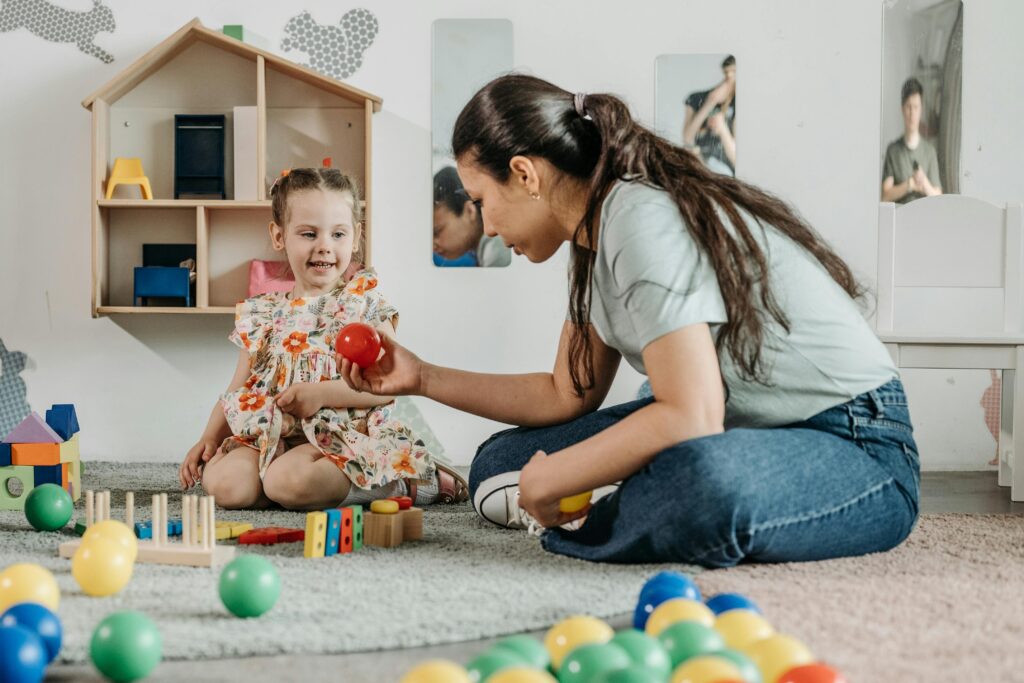
Simple Money Games for Preschoolers Without Using Apps or Screens: Advantages and Disadvantages
The benefits of the Simple Money Games for Preschoolers Without Using Apps or Screens approach, particularly in the Indian context, overwhelmingly favor hands-on learning, but they demand high parental effort.
| Section | Advantage of Screen-Free Play | Disadvantage of Screen-Free Play |
| Cognitive | Builds robust, tactile, and sensorimotor memory of value, which is neurologically superior to screen-tapping for preschoolers. | Difficult for children to transition these physical lessons to the fully abstract digital banking methods (UPI/Credit Cards) later without additional guidance. |
| Parenting | Requires active parental participation, which creates essential dialogue around the ethics and morals of money, not just the math. | Requires high parental commitment, patience, and consistency in enforcing rules (like loan repayment or chore payment). |
| Cultural/Context | The games are low-cost and use culturally relevant materials (Kirana store, Dabba jars, Shagun money), making the lessons immediately applicable. | The system can be easily sabotaged by generous, well-meaning family members (grandparents/relatives) who bypass the earning process. |
| Skill Building | Directly trains the prefrontal cortex for delayed gratification and impulse control (e.g., Coin Towers). | Preschoolers may struggle to differentiate the value of Indian coins (e.g., larger ₹1 coin vs. smaller ₹10 coin), requiring extra visual guidance. |
“The return on investment for screen-free play is measured in moral character and financial discipline, not just numerical skill.”
Troubleshooting Common Indian-Specific Financial Challenges
The Indian ecosystem presents unique financial challenges that these Simple Money Games for Preschoolers Without Using Apps or Screens are designed to address.
Challenge: Overcoming the “Infinite Money” Problem (Shagun)
The Gap: In a joint family or social setting, children often receive large amounts of unearned Shagun (cash gifts), which instantly destroys the fundamental lesson of scarcity and effort-recognition.
The Solution: Immediately implement a Central Deposit Day. All Shagun money received is placed in an envelope labeled “Pending.” On a fixed day (e.g., Sunday morning), the child formally processes the “Pending” money using the Partitioning Rule (Game 3) where a higher percentage must be allocated to the Save and Share jars. This teaches them that unearned wealth is meant primarily for responsibility and collective goals, not immediate consumption.
Challenge: Explaining the Big vs. Small Coin Value
The Gap: The Indian currency design is counter-intuitive for a child, as the ₹1 coin is often larger than the ₹10 coin. Children in the early Heteronomous Moral Stage (Ages 4–7) judge value by size/consequence, leading to confusion.
The Solution: Use the Coin Sorting Rangoli (Game 2) and focus only on the embossed number. Use a marker to draw a large ‘1’ on the ₹1 section and a large ’10’ on the ₹10 section. Explain that the number is the “power” or “value” of the coin, not the physical size. This breaks the link between physical size and abstract worth, a necessary step for financial logic.
Challenge: Teaching About Notes (₹50, ₹100) Before Counting
The Gap: Preschoolers cannot count to 50 or 100, making it hard to explain the value of higher-denomination notes.
The Solution: Designate notes as “Sleeping Money” or “Future Money.” Visually compare the single ₹50 note to a bundle of five ₹10 notes or ten ₹5 coins. Explain that the note is just a paper shortcut for many coins bundled together. Keep the child’s Spend jar strictly limited to coins and small notes (₹10, ₹20), reserving larger notes for the Save jar only.
Conclusion
Teaching Simple Money Games for Preschoolers Without Using Apps or Screens is not a luxury, but a core investment in your child’s future character and financial security. By prioritizing tactile, low-cost activities grounded in the Indian cultural context—from the Kirana store role-play to the ethics of Shagun allocation—parents can effectively build concrete cognitive pathways for delayed gratification, budgeting, and ethical allocation. These 15 screen-free games provide the essential, hands-on foundation needed to ensure your child’s financial integrity and success in a world increasingly dominated by the invisible digital economy.
This content is for educational purposes and does not constitute personalised financial advice. For personalised advice, visit our services or contact pages.