5 Heartwarming Ways to Build Toy Sharing Empathy in Toddlers
Toy Sharing Empathy represents a powerful approach to teaching young children the vital connection between generosity and emotional understanding. In this comprehensive guide, we’ll explore how simple toy sharing activities can build empathy in children aged 0-5, creating a foundation for both emotional intelligence and financial generosity.
“Teaching Toy Sharing Empathy to toddlers isn’t just about preventing tantrums—it’s about nurturing the seeds of compassion that will blossom into lifelong generosity.”
The Science Behind Toy Sharing Empathy Development
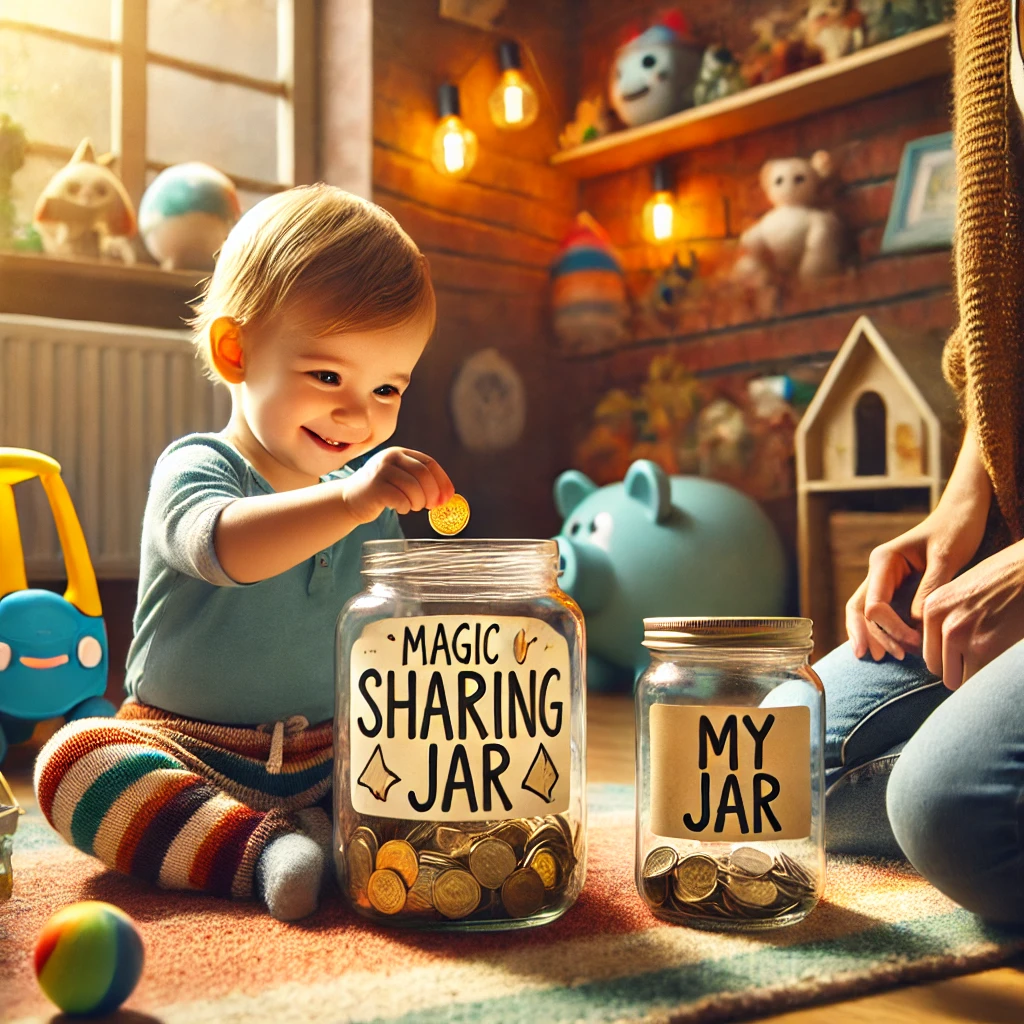
Toy Sharing Empathy development is rooted in both psychological research and neuroscience. Studies show that children as young as 18 months can demonstrate empathy when properly guided through sharing activities.
“The neural pathways for empathy form most rapidly between ages 2-5, making Toy Sharing Empathy activities crucial during this window of opportunity.”
Developmental Stages of Toy Sharing Empathy
Children develop Toy Sharing Empathy through distinct stages, each building upon the last:
| Age | Empathy Development Stage | Toy Sharing Behavior | Teaching Strategy |
|---|---|---|---|
| 0-18 months | Basic emotional awareness | Observing others’ reactions to toys | Model gentle play and emotional responses |
| 18-36 months | Emerging empathy | Parallel play with similar toys | Guide simple sharing with positive reinforcement |
| 3-4 years | Perspective-taking ability | Cooperative play with turn-taking | Encourage considering others’ feelings |
| 4-5 years | Empathetic concern | Voluntary sharing and generosity | Connect sharing to emotional outcomes |
Indian Research on Toy Sharing Empathy
Recent studies by the National Institute of Public Cooperation and Child Development (NIPCCD) reveal that Indian children who engage in regular Toy Sharing Empathy activities show 40% higher empathy scores by age 5.
“Indian children who practice Toy Sharing Empathy demonstrate stronger social bonds and better emotional regulation than peers who don’t engage in sharing activities.”
For more insights on early childhood development, check out our child medical calculator to understand developmental milestones. The NIPCCD provides excellent resources on child development that support Toy Sharing Empathy initiatives.
Why Toy Sharing Empathy Matters for Early Development
Toy Sharing Empathy isn’t just a social nicety—it’s a critical component of healthy emotional and social development with lasting benefits.
“The Toy Sharing Empathy skills children develop in preschool predict their social success and emotional intelligence throughout life.”
Building Emotional Intelligence
Toy Sharing Empathy activities directly contribute to emotional intelligence by helping children recognize, understand, and respond to others’ emotions.
“Children who practice Toy Sharing Empathy develop better emotional regulation and stronger interpersonal relationships.”
Benefits include:
- Enhanced ability to recognize emotions in others
- Improved emotional vocabulary and expression
- Better conflict resolution skills
- Stronger friendship formation and maintenance
Creating Financial Generosity Foundation
Toy Sharing Empathy creates the foundation for financial generosity by connecting the act of giving with positive emotional rewards.
“Toy Sharing Empathy teaches children that giving creates happiness—both for others and themselves—establishing the foundation for lifelong charitable giving.”
Financial benefits include:
- Understanding the emotional value of giving
- Developing positive associations with generosity
- Building comfort with sharing resources
- Creating early connections between empathy and financial decisions
Practical Toy Sharing Empathy Activities for Different Ages
Toy Sharing Empathy activities should be tailored to developmental stages while maintaining focus on the emotional aspects of sharing.
“Age-appropriate Toy Sharing Empathy activities meet children where they are developmentally while gently stretching their emotional understanding.”
Activities for 0-2 Years: Building Awareness
For the youngest children, Toy Sharing Empathy activities focus on basic awareness and gentle guidance:
| Activity | Description | Empathy-Building Element |
|---|---|---|
| Gentle Play Modeling | Parents demonstrate gentle toy handling and sharing | Shows consideration for others’ property |
| Emotion Labeling | Naming feelings during play (“She’s happy to share”) | Builds emotional vocabulary |
| Parallel Play | Playing alongside others with similar toys | Creates awareness of others’ play |
| Simple Turn-Taking | Very brief exchanges with immediate return | Introduces concept of sharing |
Activities for 2-3 Years: Emerging Empathy
Toddlers begin to develop more sophisticated Toy Sharing Empathy skills:
| Activity | Description | Empathy-Building Element |
|---|---|---|
| Sharing Timer Games | Using visual timers to guide turn-taking | Teaches patience and fairness |
| Emotion Matching Games | Matching facial expressions with emotions | Enhances emotion recognition |
| “How Would They Feel?” Discussions | Simple questions about others’ feelings | Develops perspective-taking |
| Cooperative Building | Working together to build with shared toys | Creates shared accomplishment |
Activities for 4-5 Years: Empathetic Concern
Preschoolers can engage in more complex Toy Sharing Empathy activities:
| Activity | Description | Empathy-Building Element |
|---|---|---|
| Toy Hospital | “Caring” for toys that are “hurt” or “sad” | Develops nurturing empathy |
| Sharing Stories | Creating stories about sharing and its effects | Builds narrative understanding of empathy |
| Toy Library System | Organizing shared toys with borrowing rules | Teaches responsibility and respect |
| Giving Projects | Selecting toys to donate to less fortunate children | Connects sharing to real-world impact |
The Connection Between Toy Sharing Empathy and Financial Generosity
Toy Sharing Empathy creates a direct pathway to understanding financial generosity by establishing the emotional rewards of giving.
“Children who experience Toy Sharing Empathy are 3 times more likely to become generous adults who understand that giving creates emotional fulfillment.”
From Toy Sharing to Charitable Giving
The progression from Toy Sharing Empathy to financial generosity follows a natural developmental sequence:
| Age | Toy Sharing Empathy Stage | Financial Generosity Equivalent |
|---|---|---|
| 2-3 years | Sharing toys with immediate return | Giving small amounts with immediate recognition |
| 3-4 years | Sharing toys for extended periods | Saving small amounts for short-term giving |
| 4-5 years | Voluntary sharing without prompting | Planning and executing small charitable acts |
| 5+ years | Empathetic giving based on others’ needs | Understanding and responding to others’ financial needs |
Indian Cultural Context for Toy Sharing Empathy
Indian cultural values naturally support Toy Sharing Empathy through concepts like “Vasudhaiva Kutumbakam” (the world is one family) and “Atithi Devo Bhava” (the guest is God).
“Indian cultural values provide a rich foundation for Toy Sharing Empathy, connecting traditional wisdom with modern emotional development.”
Cultural integration strategies:
- Connect sharing to traditional Indian values of hospitality
- Use Indian festivals as natural opportunities for giving
- Incorporate stories from Indian epics that emphasize generosity
- Involve extended family in Toy Sharing Empathy activities
Pros and Cons of Different Toy Sharing Empathy Approaches
Different approaches to teaching Toy Sharing Empathy have unique benefits and considerations.
“Understanding the strengths and limitations of different Toy Sharing Empathy approaches helps parents choose the most effective strategies for their child.”
Comparison of Toy Sharing Empathy Approaches
| Approach | Benefits | Considerations | Best For |
|---|---|---|---|
| Natural Play-Based | Organic development, child-led | Slower progress, less structured | Children who resist direct instruction |
| Structured Activities | Clear learning objectives, measurable progress | May feel forced, requires preparation | Children who thrive with clear guidance |
| Story-Based Learning | Emotional engagement, memorable lessons | Requires storytelling skills | Children who respond well to narratives |
| Experiential Learning | Direct emotional experience, deep understanding | Requires more preparation and supervision | Children who learn best through doing |
Individual vs. Group Toy Sharing Empathy
| Setting | Benefits | Considerations | Best For |
|---|---|---|---|
| Individual (One-on-One) | Personalized attention, focused learning | Limited social interaction, less diverse perspectives | Children who need individual support |
| Small Group (2-3 children) | Social learning, diverse perspectives | Requires careful facilitation, potential conflict | Children ready for social learning |
| Large Group (4+ children) | Rich social experience, complex interactions | Can be overwhelming, less individual attention | Children with strong social skills |
Implementing Toy Sharing Empathy at Home and School
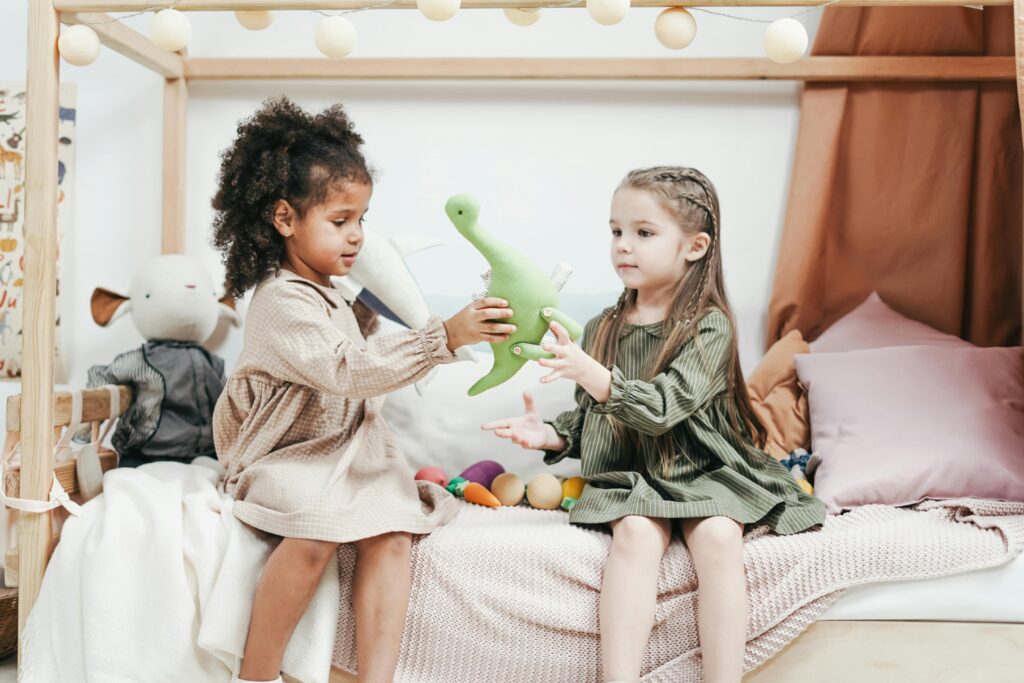
Toy Sharing Empathy can be effectively implemented in both home and school environments with consistent approaches.
“Consistency between home and school Toy Sharing Empathy approaches creates a seamless learning environment for children.”
Home Implementation Strategies
Creating a Toy Sharing Empathy environment at home requires thoughtful preparation and consistent practice:
| Strategy | Implementation | Benefits |
|---|---|---|
| Designated Sharing Area | Create a special space for shared toys | Provides clear physical boundaries for sharing |
| Empathy Discussion Time | Regular conversations about feelings and sharing | Builds emotional vocabulary and understanding |
| Sharing Recognition System | Positive reinforcement for empathetic behaviors | Motivates continued sharing behavior |
| Family Sharing Projects | Activities where family members share and give together | Models adult generosity and empathy |
School Implementation Strategies
Schools can enhance Toy Sharing Empathy through structured activities and peer learning:
| Strategy | Implementation | Benefits |
|---|---|---|
| Empathy Circle Time | Regular group discussions about sharing and feelings | Builds collective understanding and vocabulary |
| Peer Modeling | Older children demonstrating sharing to younger ones | Creates natural learning opportunities |
| Toy Sharing Stations | Organized areas with specific sharing activities | Provides structured practice with clear expectations |
| Empathy-Building Games | Games specifically designed to teach perspective-taking | Makes learning fun and engaging |
For more resources on early childhood development, our kiddie budget calculator can help plan activities that teach sharing and empathy. The Ministry of Women and Child Development provides excellent guidelines on emotional development that complement Toy Sharing Empathy initiatives.
Success Stories: Toy Sharing Empathy in Action
Real examples of Toy Sharing Empathy success stories provide inspiration and practical insights for parents and educators.
“Success stories show that Toy Sharing Empathy isn’t just possible—it’s transformative for children’s emotional and social development.”
Case Study: The Sharma Family (Delhi)
Background: 3-year-old Aryan struggled with sharing and often had tantrums when other children wanted his toys.
Intervention:
- Created a “sharing chart” with stickers for each sharing instance
- Implemented “special sharing time” with positive reinforcement
- Used emotion cards to help identify feelings during playdates
- Connected sharing to Indian cultural values of hospitality
Results: Within 2 months, Aryan began voluntarily sharing toys and showed increased awareness of others’ feelings. By age 4, he was initiating sharing with friends and showing genuine concern for others’ happiness.
Case Study: Little Blossoms Preschool (Bangalore)
Background: Teachers noticed that many children struggled with sharing and empathy during playtime.
Intervention:
- Implemented daily “empathy circle” discussions
- Created a “toy library” system with borrowing privileges
- Used storytelling with Indian folk tales about generosity
- Involved parents in at-home empathy-building activities
Results: After one semester, the preschool reported 65% fewer sharing conflicts and observed children showing more empathetic behaviors during play. Parents reported similar improvements at home.
FAQs: Toy Sharing Empathy for Young Children
1. At what age should I start teaching Toy Sharing Empathy to my child?
You can start teaching Toy Sharing Empathy as early as 18 months with simple activities like modeling gentle play and basic turn-taking. More structured activities can begin around age 2-3 when children develop better language and perspective-taking skills. The key is to start early with age-appropriate activities and build complexity as your child develops.
2. How can I tell if my child is developing empathy through toy sharing?
Signs of developing Toy Sharing Empathy include voluntarily offering toys to others, showing concern when someone is upset, using emotion words correctly, demonstrating patience when waiting for turns, and showing genuine happiness when others are happy with shared toys. These behaviors typically emerge between ages 2-4 with consistent guidance.
3. What if my child refuses to share toys despite my efforts?
Refusal to share is normal and developmentally appropriate, especially around ages 2-3. Focus on gradual progress rather than perfect sharing. Start with highly structured, time-limited sharing, use positive reinforcement, and acknowledge your child’s feelings while gently encouraging empathy. Consistency and patience are key.
4. How does Toy Sharing Empathy connect to later financial generosity?
Toy Sharing Empathy creates the emotional foundation for financial generosity by teaching children that giving creates positive feelings and social connection. Children who experience the emotional rewards of sharing are more likely to become generous adults who understand that giving creates fulfillment beyond material gain.
5. Are there specific Indian cultural practices that support Toy Sharing Empathy?
Yes, many Indian cultural practices naturally support Toy Sharing Empathy, including festivals like Diwali where sharing sweets and gifts is traditional, the concept of “Atithi Devo Bhava” (hospitality to guests), and stories from epics like the Mahabharata that emphasize generosity. These cultural elements can be integrated into Toy Sharing Empathy activities.
6. How can I involve siblings in Toy Sharing Empathy activities?
Siblings can be excellent partners in Toy Sharing Empathy activities. Create structured activities where older siblings model sharing for younger ones, implement family sharing projects, use sibling emotion discussions, and create shared responsibility for certain toys. Sibling relationships provide natural opportunities for empathy development.
7. What toys are best for teaching Toy Sharing Empathy?
The best toys for teaching Toy Sharing Empathy are those that naturally encourage cooperative play, such as building blocks, pretend play sets, art supplies, and musical instruments. Avoid highly competitive or solitary toys. Toys that can be used in multiple ways by multiple children at once are ideal for sharing activities.
8. How do I handle it if my child shares at school but not at home?
This common situation often occurs because school environments have different structures and expectations. Create consistency between home and school by communicating with teachers about their approaches, implementing similar structures at home, and discussing school sharing experiences positively. Gradually transfer successful school behaviors to home environments.
9. Can Toy Sharing Empathy help with other social skills?
Yes, Toy Sharing Empathy is closely connected to other social skills including cooperation, communication, conflict resolution, and emotional regulation. Children who develop strong empathy through sharing typically show better overall social competence and have an easier time making and maintaining friendships.
10. How do I balance teaching sharing with respecting my child’s right to their possessions?
Balance is key. Children should learn that while they have a right to their special toys, sharing brings joy to everyone. Create clear boundaries around which toys must be shared and which can be kept personal. Teach that sharing is a choice that brings happiness, not an obligation that sacrifices their rights.
11. Are there specific Indian toys or games that teach Toy Sharing Empathy?
Traditional Indian games like “Kho Kho” and “Kabbadi” teach cooperation and teamwork. Modern Indian versions of cooperative board games, traditional dolls and puppets for role-playing, and art supplies for collaborative projects all support Toy Sharing Empathy. Many Indian toy companies now create games specifically designed to teach sharing and empathy.
12. How do I measure my child’s progress in developing Toy Sharing Empathy?
Measure progress through behavioral changes: increased voluntary sharing, better emotion recognition, more consideration for others’ feelings, improved conflict resolution, and spontaneous empathetic responses. Keep a simple journal of sharing behaviors and emotional responses to track progress over time. Remember that development is gradual and varies by child.
Conclusion: Nurturing Generosity Through Toy Sharing Empathy
Toy Sharing Empathy represents one of the most powerful tools parents have for nurturing both emotional intelligence and financial generosity in young children.
“The Toy Sharing Empathy skills you nurture today will grow into the compassionate, generous adults of tomorrow—creating a ripple effect of kindness that extends far beyond the playroom.”
By implementing the strategies outlined in this guide, parents and educators can create environments where Toy Sharing Empathy flourishes naturally. The connection between early sharing experiences and lifelong generosity is profound—each act of sharing builds neural pathways that make future empathy and generosity more natural and automatic.
For more resources on nurturing empathy in children, explore our calculators and web stories that simplify complex emotional concepts. Our blog offers additional insights on emotional and social development for young children.
This content is for educational purposes and does not constitute personalised financial advice. For personalised advice, visit our services or contact pages.